If you are planning a hot water system for a hotel, hospital, residential building or industrial facility, you may come across two terms that are often used together: calorifier and boiler. Because both are part of a hot water system, it is easy to assume they do the same job. But they don’t. The simplest way to understand the difference is this: A boiler generates heat. A calorifier stores and supplies hot water. In many commercial and industrial applications, the two systems work together. The boiler produces the heat, while the calorifier stores the heated water and makes it available when demand increases. Let’s take a closer look at how each system works and when you may need these. What Is a Boiler? A boiler is a heating system designed to heat water or generate steam. Depending on the type of system, it may use diesel, LPG, natural gas or electricity as its energy source. The heated water or steam can then be used for several purposes, including: In a large hotel, for example, the boiler may provide the heat required to support the building’s hot water system. In an industrial facility, it may also provide steam or hot water for manufacturing and processing operations. The key role of a boiler is therefore heat generation. For a more detailed look at boiler types and applications, you can explore Cauldron’s commercial boiler solutions. What Is a Calorifier? A calorifier is a hot water storage vessel designed to store a large volume of heated water for later use. Unlike a boiler, a calorifier does not necessarily generate heat by burning fuel. Instead, it receives heat from another source. Depending on the system design, a calorifier can be heated using: The heated water is stored inside the calorifier and supplied when required. This makes calorifiers particularly useful in buildings where hot water demand can change throughout the day. For example, a hotel may experience its highest hot water demand in the morning when hundreds of guests are showering at roughly the same time. A properly sized calorifier helps ensure that sufficient hot water is available during these peak periods. Calorifier vs Boiler: Here is a simple comparison between the two: Feature Calorifier Boiler Main purpose Stores and supplies hot water Generates heat or steam Heat generation Usually receives heat from another source Produces heat using fuel or electricity Water storage Yes, typically designed for hot water storage Usually focused on heating rather than storage Energy source Can work with boilers, heat pumps, solar or electricity Can use gas, LPG, diesel or electricity Common applications Hotels, hospitals, residential towers and commercial buildings Hotels, hospitals, industrial facilities and heating systems Can work together? Yes Yes The easiest way to remember the difference is: The boiler is the heat source, while the calorifier is the hot water storage system. How Does a Boiler and Calorifier Work Together? In many commercial hot water systems, a boiler and calorifier are part of the same setup. A normal system works like this: This arrangement helps buildings handle periods of high demand without requiring the boiler to respond instantly to every increase in hot water usage. For example, in a hotel, guests may create a sudden peak in demand during the morning. The calorifier acts as a thermal storage system, ensuring hot water is already available when it is needed. When Do You Need a Boiler? A boiler may be the right solution when your facility needs a reliable source of heat for: The correct boiler capacity depends on factors such as the building’s hot water demand, operating hours, peak load and the intended application. For larger projects, proper boiler sizing is especially important. An undersized system may struggle during peak demand, while an oversized system can lead to unnecessary capital and operating costs. When Do You Need a Calorifier? A calorifier is generally useful when your building requires large volumes of stored hot water. Common applications include: A calorifier can be particularly valuable where hot water demand is not constant throughout the day. Instead of relying entirely on instant water heating, the system stores heated water and makes it available when demand increases. This can help improve system reliability and support consistent hot water availability in large buildings. Can a Calorifier Work Without a Boiler? Yes. A calorifier does not always need to be connected to a boiler. Depending on the project requirements, the heat source may be: For example, a building using renewable energy may use solar water heating or heat pumps to provide the heat required by the calorifier. This flexibility is one reason calorifiers are widely used in commercial and industrial hot water systems. Which Is Better: A Calorifier or a Boiler? This is not really a case of choosing one over the other. A calorifier and a boiler perform different functions. If your main requirement is to generate heat, you may need a boiler. If you need to store and supply large volumes of hot water, you may need a calorifier. In many large commercial and industrial projects, the most effective solution involves both systems working together. The right configuration will depend on several factors, including: For this reason, system design should consider the complete hot water demand rather than selecting a boiler or calorifier based on capacity alone. Choosing the Right Hot Water System for Your Building A hotel with hundreds of rooms will have very different hot water requirements from a small commercial building. Similarly, a hospital or industrial facility may require continuous hot water availability, backup capacity and specialised system controls. Before selecting a system, it is important to understand: How much hot water is required?This includes both daily consumption and peak demand. When is the highest demand?Morning and evening peaks can significantly affect system sizing. What energy source is available?The system may use LPG, diesel, electricity, solar energy or heat pump technology. Does the building need hot water storage?Large facilities often benefit from a properly sized calorifier to manage peak
Top 10 Types of Boilers for Commercial & Industrial Applications in UAE
Boilers play an important role in many commercial, residential, hospitality and industrial facilities across the United Arab Emirates. From providing hot water in hotels and residential buildings to generating steam for industrial processes, the right boiler can have a major impact on energy efficiency, reliability and operating costs. Choosing the right commercial and industrial boiler requires considering the building’s heating requirements, capacity, fuel availability and intended application. But with different boiler designs, fuel options and applications available, choosing the right system can be challenging. So, what are the top types of boilers available for commercial and industrial applications in the UAE? In this guide, we look at 10 important boiler types, how they work, where they are commonly used and what to consider when selecting a boiler in Dubai or elsewhere in the UAE. Note: There is no single “best boiler” for every building. The right choice depends on heating requirements, required capacity, fuel availability, operating conditions, space, efficiency targets and the intended application. What Is a Boiler? A boiler is a heating system designed to transfer heat to water or another fluid. Depending on the design, a boiler can produce hot water or steam for heating, domestic hot-water systems or industrial processes. Commercial and industrial boiler systems can use different fuels and technologies, including natural gas, oil and electricity. They can also be classified according to how heat is transferred, such as fire-tube and water-tube boilers. In UAE, boilers are commonly used in: The appropriate boiler depends on the building’s heating and hot-water requirements. Top 10 Types of Boilers 1. Gas-Fired Boilers Gas-fired boilers use natural gas or another suitable gaseous fuel to generate heat. They are commonly considered for commercial and industrial applications where a suitable gas supply is available.If you are evaluating a gas boiler in Dubai, it is important to consider fuel availability, required capacity, efficiency, installation conditions and long-term operating requirements before selecting a system. Advantages of gas-fired boilers Common applications Gas boilers can be used in: 2. Oil-Fired Boilers Oil-fired boilers use heating oil or another approved liquid fuel as their energy source. They can be useful where gas availability is limited or where a project has specific fuel requirements. However, fuel storage, handling, emissions, maintenance and operating costs should be considered when evaluating an oil-fired boiler. Advantages 3. Electric Boilers Electric boilers use electrical heating elements to heat water. Because they do not require on-site combustion, electric boilers can be suitable for applications where electrical power is readily available and there are specific requirements around fuel combustion. Benefits of electric boilers The suitability of an electric boiler depends on the building’s electrical infrastructure, required heating capacity, operating profile and energy costs. For a commercial project in Dubai, these factors should be evaluated before choosing an electric boiler in UAE. 4. Steam Boilers Steam boilers heat water to produce steam under controlled operating conditions. Steam can then be distributed through a piping system for heating or industrial processes. According to the U.S. EPA, steam systems are widely used for industrial processes, cooking, heating and other operations, with water-tube and fire-tube systems among the common designs. Common applications of steam boilers Steam boiler selection requires careful consideration of required steam pressure, steam output, fuel type, operating conditions and safety requirements. 5. Hot Water Boilers Hot water boilers heat water without converting it into steam. They are commonly used for building heating and hot-water applications. The EPA describes hot water boilers as commercial or industrial-scale water heaters used for applications such as bathing, laundry and dishwashing. Common applications Hot water boilers are suitable for: For buildings requiring a reliable supply of heated water, a properly sized commercial hot water boiler can form an important part of the overall heating system. 6. Fire-Tube Boilers Fire-tube boilers are designed so that hot combustion gases pass through tubes surrounded by water. This design is commonly used in packaged commercial and industrial boiler systems. How does a fire-tube boiler work? The basic process is: Fuel combustion → Hot gases → Tubes → Heat transferred to water → Hot water or steam Fire-tube boilers can be suitable for applications with moderate steam or heating requirements. Applications Fire-tube boilers are particularly important to consider when evaluating commercial boilers in Dubai because they are commonly used for packaged heating applications. 7. Water-Tube Boilers Water-tube boilers work differently from fire-tube boilers. In a water-tube boiler, water flows through tubes while hot combustion gases pass around the tubes and transfer heat to the water. Water-tube boilers are widely associated with larger steam outputs and higher-pressure applications. Bosch’s technical guidance, for example, notes their use for very large steam outputs and higher pressures. Advantages Common applications 8. Condensing Boilers Condensing boilers are designed to recover additional heat from water vapour in combustion gases. This allows the boiler to extract more useful heat from the combustion process. The U.S. Department of Energy notes that condensing hot-water boilers can recover heat from water vapour in combustion gases and are typically more efficient than non-condensing boilers, although they require suitable corrosion-resistant materials and have other design considerations. Why consider a condensing boiler? Potential advantages include: However, condensing technology is not automatically the best choice for every project. System design, return-water temperature, load profile, installation conditions and lifecycle cost should all be considered. 9. Combination Boilers Combination boilers, commonly called combi boilers, combine heating and hot-water functions within one system. They can be useful where both space heating and hot-water generation are required. Advantages The suitability of a combination boiler depends on the building’s hot-water demand and heating requirements. For larger commercial buildings, a different boiler configuration may be more appropriate depending on the required capacity. 10. High-Efficiency Commercial & Industrial Boilers The final category is not a single heat-transfer design. Instead, it represents modern boiler systems designed to provide efficient operation for demanding commercial and industrial applications. High-efficiency boilers can incorporate technologies such as: The U.S. Department of Energy recommends considering lifecycle cost rather than simply the initial
What Is a Water Chiller Used For?
A chiller can mean different things to different people. That’s because chillers quietly support many of the cooling needs in UAE buildings and industrial facilities. Most people only notice them when something goes wrong, like when the air conditioning stops maintaining the right temperature, a production process starts overheating, or a cold room isn’t cooling properly. If you’ve searched for “what is a water chiller used for,” you’re probably trying to figure out whether a chiller is the right solution for your project, or whether you actually need something else, such as an AC condenser, cooling tower, or cold room unit. Here’s a simple explanation of what chillers do and where they are commonly used across UAE hotels, factories, hospitals, and commercial buildings. What Does a Water Chiller Do? At its core, a water chiller removes heat from water, or a water-glycol mixture, and circulates that chilled liquid to wherever cooling is needed; an air handling unit, a production line, a server room, or a cold storage area. The liquid absorbs heat from whatever it’s cooling, returns to the chiller, gets cooled back down, and goes out again. It’s a continuous loop, not a one-time blast of cold air the way a split AC unit works. Chillers broadly fall into two categories: air-cooled units, which reject the absorbed heat straight into the outside air, and water-cooled units, which pass that heat to a secondary loop, usually a cooling tower. We’ve covered how those setups differ, along with the other chiller categories worth knowing about, in Types of Water Chiller Systems. This post focuses less on which type you need and more on why facilities need one in the first place. Where Water Chillers Are Used? Manufacturing and Industrial Process Cooling In a factory, heat is a byproduct of almost everything, like moulding machines, extruders, welding equipment, compressors. Left unmanaged, that heat warps tolerances, shortens machine life, and slows production. Chillers pull that heat away and hold process water at a steady temperature, which is often the difference between a consistent production run and a batch of rejected parts. Chillers used for this purpose frequently work alongside water filtration systems to keep the closed loop clean and prevent scale build-up inside the machine, which matters even more in the UAE given the mineral content of local water supplies. Food and Beverage Production Bottling lines, dairy processing, bakeries, and cold-chain packaging all depend on precise temperature control to keep products safe and consistent. A chiller here isn’t just about comfort cooling, it’s a food-safety control point. Glycol chillers in particular are common in this space, since a water-glycol mix can run at lower temperatures without freezing. Commercial Buildings and Central HVAC This is the application most people picture first. Office towers, malls, and mixed-use developments in the UAE rarely rely on individual split units once they pass a certain size. It’s far more efficient to run one or several central chillers feeding air handling units on every floor. Given how many months of the year Dubai and Abu Dhabi sit above 35°C, a central chiller plant is doing more sustained, heavier-duty work here than in most other climates, which is also why sizing and maintenance schedules matter more locally than they might elsewhere. Hotels and Hospitality Hotels have a slightly different problem: they need reliable cooling and reliable hot water at the same time, often at very different points in the building. Chillers handle the cooling load while separate systems handle domestic hot water, but the two are frequently specified and installed together. Hotel projects we’ve worked on typically pair a water chiller system with calorifiers and boilers so guest comfort doesn’t depend on juggling three unrelated systems. Healthcare Facilities Hospitals and clinics run equipment like MRI machines, lab refrigeration, and sterilisation units that cannot tolerate temperature swings. A chiller failure in a hospital isn’t an inconvenience; it’s a clinical risk. That’s why healthcare projects tend to specify redundancy (a backup chiller or module) rather than relying on a single unit with no fallback. Data Centres and Server Rooms Servers generate constant heat regardless of the time of day or season, so the cooling demand never really drops the way it might in an office. Chillers here are typically sized with less tolerance for downtime than almost any other application, since even a short cooling interruption can mean equipment throttling or failure. Villas and Smaller Domestic Projects Not every chiller application is industrial. Larger private villas sometimes use a packaged water chiller to cool domestic water or feed a villa-wide air conditioning setup, particularly where a single system covering the whole property is more practical than multiple split units. These units are typically smaller and fully automatic, cooling to a set temperature and switching off once that point is reached. Signs Your Facility Might Need a Water Chiller A few patterns tend to show up before a facility manager starts looking into water chillers seriously: If any of that sounds familiar, it’s usually worth a proper load assessment before committing to a specific unit. Our team handles that kind of site evaluation as part of our engineering, installation and technical services, covering everything from sizing through installation and commissioning. Choosing the Right Chiller for the Application Once the application is clear, the next decision is which type of chiller actually fits it; air-cooled versus water-cooled, standard water versus glycol, and what tonnage or capacity the load calls for. We’ve covered selection factors, from tonnage and energy evaluation to spare parts availability, in How To Choosing The Right Chiller. As a general rule, air-cooled units tend to suit smaller or space-constrained sites since they skip the cooling tower, while water-cooled systems tend to win out on larger, continuous-load applications where the extra efficiency offsets the added infrastructure. Conclusion Whether you’re cooling a production line, a hotel, or a hospital wing, the application should drive the specification, not the other way round. If you’re weighing up options for a UAE project, get in
What Is a Calorifier? Types, Uses and How to Choose the Right Supplier in UAE
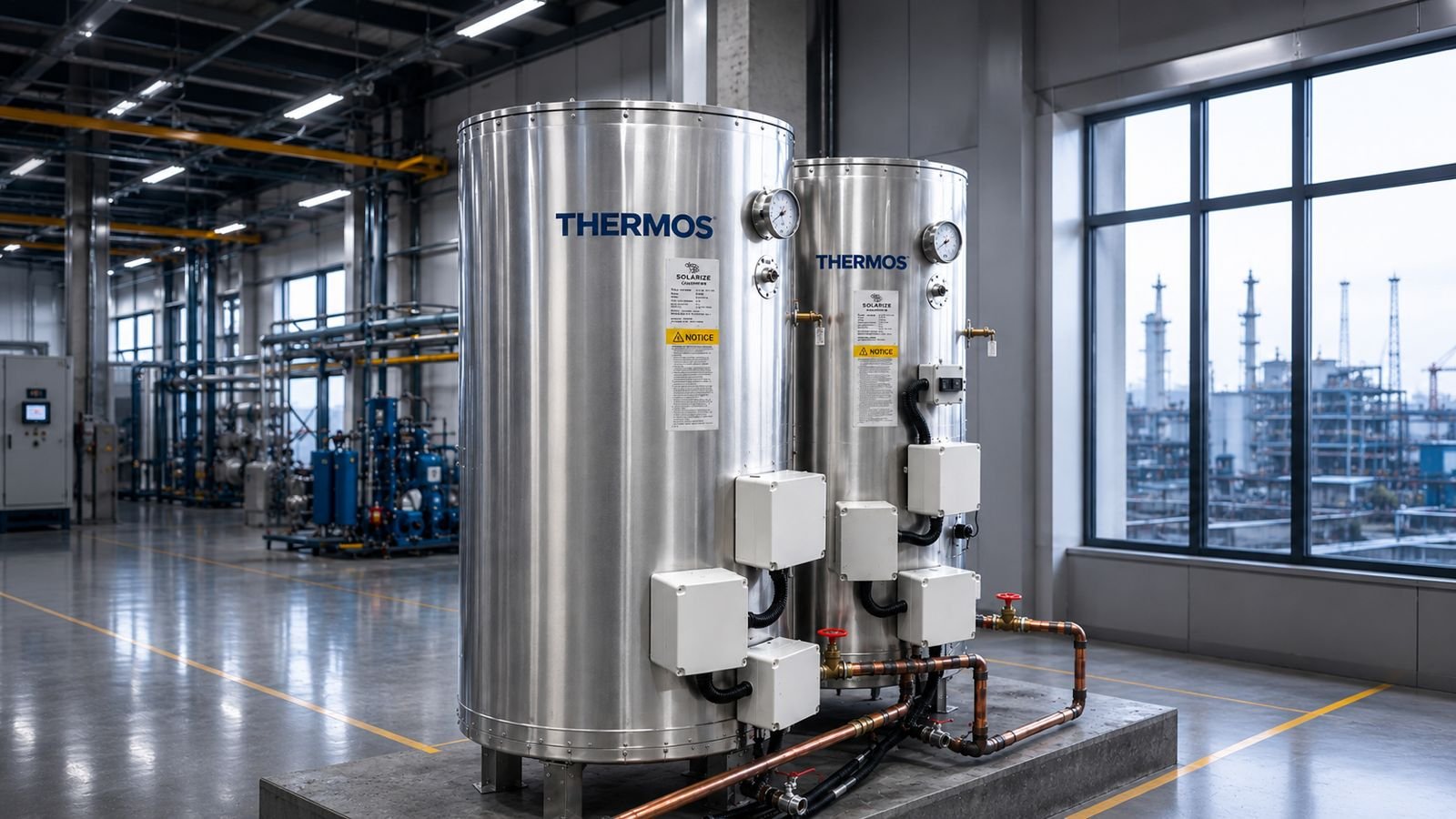
Most people don’t think about where their hot water comes from until there’s a problem. The shower suddenly turns cold, the hotel runs out of hot water during peak hours, or a new building project reaches the stage where every piece of mechanical equipment needs to be specified. That’s when the term “calorifier” starts appearing in conversations. For many, it’s an unfamiliar word. Some engineers refer to it as a hot water storage tank, others call it a hot water cylinder, while maintenance teams often say “the hot water tank.” Different names, but they all refer to the same essential piece of equipment that keeps hot water available throughout a building. Whether you’re planning a residential tower, managing a commercial facility, upgrading an industrial plant, or simply trying to understand why your building’s hot water system isn’t performing as expected, knowing how a calorifier works is important. In this guide, we’ll explain what a calorifier is, how it fits into a building’s hot water system, the different types available, where they’re commonly used, and what to consider when choosing reliable calorifier suppliers in the UAE. What Is a Calorifier? A calorifier is an insulated storage vessel that heats and holds water using an external heat source, rather than generating heat itself. That heat source is typically a boiler, heat pump, solar system, or electric element, and the calorifier’s job is simply to store the hot water it produces and hold it at temperature until it’s needed. In practice, that makes a calorifier the “buffer” between a heat source that produces hot water steadily and a building that demands it unevenly. A hotel doesn’t need hot water at a constant rate all day; it needs a lot of it, fast, at 7 a.m. and 7 p.m. In a commercial context, “calorifier” usually refers to a purpose-built storage tank serving a hotel, hospital, residential tower, or industrial facility, rather than the small storage heater under a kitchen sink. That distinction is important in the UAE, where most calorifiers installed are commercial-grade, engineered for continuous cycling and far higher storage capacities than a typical domestic cylinder. What Is a Calorifier Used For? Calorifiers exist to solve a timing problem: the gap between when hot water is generated and when it’s actually demanded. Across UAE buildings, that shows up in a few recurring ways. If you’re trying to work out whether your building needs a calorifier, the real question isn’t “do we need hot water storage,” it’s “how much simultaneous demand do we actually hit, and how long can we afford for the system to recover between peaks.” Types of Calorifiers Commercial calorifiers are generally grouped by how they receive heat, and by the material they’re built from. Type How it works Best suited for Storage (indirect) calorifier Contains an internal heating coil, removable coil, or heat exchanger; heats and stores water in one vessel Hotels, hospitals, schools: sites needing a self-contained, low-maintenance storage and heating unit Buffer calorifier Has no internal heating source; water is heated externally and stored Sites with a dedicated external heat exchanger or existing steam/boiler plant already producing hot water SS316L stainless steel tanks Constructed from marine-grade stainless steel rather than mild steel or glass-lined carbon steel Projects prioritising corrosion resistance, longer service life, and lower long-term maintenance Storage calorifiers tend to be the default choice for hospitality and healthcare projects because recovery times (usually one to four hours) suit predictable demand patterns, and because they don’t carry the electrical infrastructure overhead of larger transformer-fed systems. Buffer calorifiers make more sense where a facility already has a steam plant or external heat exchanger doing the heavy lifting. What’s the Difference Between a Calorifier and a Boiler? A boiler generates heat; it burns fuel or uses electricity to raise water temperature. A calorifier stores heat; it holds water that’s already been heated, ready for use. In most commercial systems, the two work together: the boiler produces hot water or steam, and the calorifier stores it in the volume needed to cover peak demand. Neither one replaces the other; a boiler without adequate storage struggles with simultaneous demand, and a calorifier without a heat source is just an insulated empty tank. Why Is Calorifier Demand in the UAE High? A few regional factors shape how calorifiers get specified here. Hospitality demand is the biggest driver. Dubai and Abu Dhabi’s hotel sector needs enough stored hot water capacity to handle simultaneous guest demand across hundreds of rooms without a drop in temperature or pressure, which pushes many projects toward larger storage volumes than you’d size for a similar building in a milder climate. Corrosion resistance also matters more here than in many markets, given water hardness and quality variability across the region, which is a large part of why SS316L stainless steel tanks have become the preferred choice over older mild steel or glass-lined designs. And because a meaningful share of UAE building stock is now over a decade old, there’s a steady, ongoing market for calorifier replacement and retrofit rather than only new installations. How to Choose a Calorifier Suppliers in UAE? Not every supplier bringing calorifiers into the UAE is set up to support them once they’re installed. A few things worth checking before committing to a supplier: Cauldron manufactures Solarize SS316L calorifier tanks locally in the UAE, alongside THERMOS calorifiers designed for commercial and industrial applications, engineered for hotels, hospitals, residential towers, and industrial facilities across the UAE and Middle East. When to Consider Calorifier Replacement or Retrofit? Calorifiers rarely fail without warning. Inconsistent hot water temperature, slower recovery than the tank used to manage, visible corrosion or leaks around fittings, and rising energy costs without a change in usage are all reasonably common signs that a system is due for replacement rather than another repair. Retrofitting an ageing mild-steel tank to a modern SS316L calorifier, in particular, can meaningfully extend service life and reduce the corrosion-related maintenance that older tanks are prone to. If any of that
Calorifier Tank vs Traditional Water Heater: Which Hot Water System Does Your UAE Building Need?
If you’ve ever sat in a meeting deciding how a new hotel wing, hospital block, or residential tower is going to get its hot water, you’ve probably heard two words: “water heater” and “calorifier tank.”They both are not the same, and picking the wrong one is one of those decisions that looks fine on a spec sheet and then turns into a maintenance headache three summers later, right around the time occupancy peaks and every tap in the building wants hot water at once. Which one to use depends on the size of the building, how many people are drawing hot water at the same time, and what you already have running in the plant room. Here’s how to actually tell the two apart, and where each one fits. What Is a Traditional Water Heater? A traditional water heater is a self-contained unit. It has its own heating element, electric or gas, built directly into the tank, and it heats and stores water in one box. This is the setup most people know from home: a villa’s electric water heater under the sink, or a small tankless unit feeding one bathroom. These units are simple, relatively cheap to install, and easy to replace. Their limitation is scale. A traditional water heater is sized for a handful of fixtures, not a hundred hotel rooms. Once demand climbs, you either need dozens of individual units scattered through a building, or you accept that hot water will run out during peak hours. What Is a Calorifier Tank? A calorifier tank works on a different principle entirely. It doesn’t generate its own heat. Instead, it’s an insulated storage vessel that gets its heat from an external source, typically a commercial boiler, a heat pump, or a solar thermal system, through an internal coil, a U-tube, or a plate heat exchanger. The tank’s only job is to store a large volume of hot water and hold its temperature until it’s needed. Since a calorifier is just a storage and heat-transfer vessel, one large tank can serve an entire building instead of one fixture. We’ve covered the mechanics of this pairing in more detail, including how a calorifier tank works alongside a diesel-fired boiler to keep hot water flowing during heavy demand, and the short version is that the two components do different jobs: the boiler makes the heat, the calorifier stores it. Calorifier Tank vs Traditional Water Heater Factor Traditional Water Heater Calorifier Tank Heat source Built-in element (electric/gas) External source (boiler, heat pump, solar) Storage capacity Small, typically under 300 litres Large, from hundreds to thousands of litres Best suited for Villas, single apartments, small offices Hotels, hospitals, residential towers, industrial sites Construction Mild steel or glass-lined, shorter lifespan Often SS316L stainless steel, built for longevity Recovery time Fast for small volumes, weak under sustained load Engineered for continuous high-volume draw Maintenance Element replacement, tank corrosion over time Periodic descaling, anode/coil checks, longer service intervals Integration Standalone Works with existing commercial boiler systems, heat pumps, or solar A hotel with 200 rooms doesn’t need 200 separate water heaters working independently; it needs one properly sized calorifier tank (or a bank of them) that can recover fast enough to keep up with morning shower rushes without every guest getting a lukewarm trickle. Why UAE Commercial and Hospitality Buildings Lean Toward Calorifiers? A few things about operating in the UAE push commercial buildings toward calorifier-based systems rather than a wall of individual heaters. First, there’s the sheer density of demand. Hotels, hospitals, and residential towers here run hot water systems that need to serve dozens or hundreds of outlets at the same time, and a calorifier’s storage capacity absorbs that peak load in a way scattered small heaters can’t. Second, most large UAE properties already have a commercial boiler system running for space heating, laundry, or process needs. A calorifier lets that existing plant double up as the hot water source, rather than installing a completely separate heating infrastructure. It’s a more efficient use of what’s already in the plant room. Third, water quality plays a bigger role than people expect. Calorifiers built from SS316L stainless steel hold up far better against scaling and corrosion than mild steel tanks, which matters when local feed water is hard. Pairing the calorifier with proper feed-water treatment stretches its service life considerably. And fourth, many of UAE buildings are dealing with ageing plant rooms rather than blank-slate designs. If your hot water system is a decade or more old and struggling to keep up, the fix is often a calorifier retrofit rather than a full rebuild. When can a Traditional Water Heater be Used? None of this means calorifiers are always the right choice. For a standalone villa, a small office with one or two washrooms, or a low-occupancy staff accommodation block, a traditional water heater is still the simpler, cheaper, and perfectly adequate option. Installing a calorifier system for three taps is over-engineering; you’d be paying for storage capacity and plant-room integration you’ll never use. If your building has more than a handful of people who might want hot water at the same time, storage and recovery capacity start to matter more than a compact footprint. Choosing a Calorifier Manufacturer in the UAE Once a project calls for a calorifier rather than a standard heater, the manufacturer and installer matter almost as much as the equipment itself. A few things worth checking before signing off on a supplier: This is also where the distinction between a manufacturer and a general supplier. Plenty of companies will sell you a tank; fewer can size it, integrate it with your existing plant, and support it for the next fifteen years. Cauldron manufactures its own SS316L calorifier tanks in the UAE under the Solarize and Thermos brands, and works as a commercial hot water system supplier across Dubai and the wider UAE, covering everything from initial sizing to retrofit and replacement of ageing systems. If you’re weighing up a calorifier against
Boiler Upgradation in Dubai: Benefits, Process & When to Upgrade
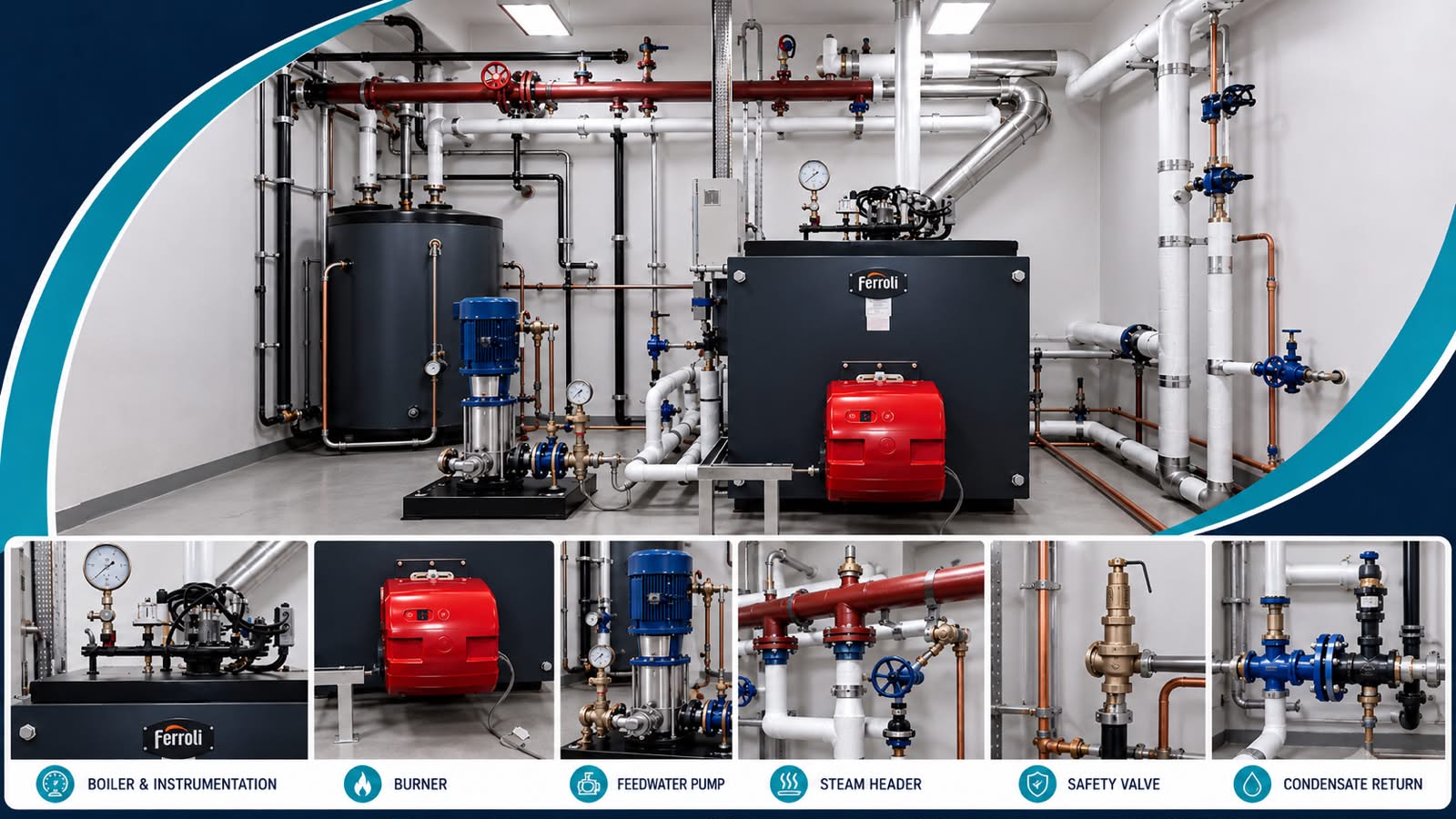
Boilers are an important part of many commercial, residential, hospitality, healthcare and industrial facilities in Dubai. Over time, even a well-maintained boiler can become less efficient, require more frequent repairs or struggle to meet the heating demands of a building. When this happens, a complete boiler replacement is not always the only option. Depending on the condition of the system, boiler upgradation, modernization or retrofit may improve performance, efficiency and reliability while extending the useful life of the existing system. But how do you know when a boiler needs an upgrade? What are the benefits of upgrading an existing boiler? And when is replacement a better option? This guide explains everything you need to know about boiler upgradation in Dubai, including the signs that your boiler may need an upgrade, the benefits, the upgrade process and the difference between upgrading and replacing a boiler. What Is Boiler Upgradation? Boiler upgradation involves improving an existing boiler system by replacing, modifying or modernizing components to improve its performance, efficiency, reliability and safety. Depending on the condition and design of the existing system, an upgrade may involve improvements to: The objective is not to replace individual parts. A proper boiler upgrade begins with an assessment of the existing system to determine what is working efficiently, what needs improvement and whether upgrading is technically and economically suitable. For some buildings, upgrading selected components can extend the service life of an existing boiler. For others, replacing the entire boiler may be the more practical solution. Why Do Older Boilers Need Upgradation? Boilers operate for long periods and are exposed to continuous heating, pressure and mechanical operation. As equipment ages, its efficiency and reliability can gradually decline. Some common reasons for considering a boiler upgrade include: 1. Declining Efficiency Older boiler systems may consume more energy to produce the same heating output. Upgrading certain components or controls can help improve system efficiency. 2. Frequent Breakdowns Repeated breakdowns can indicate that important components are reaching the end of their useful life. 3. Increasing Maintenance Costs If a boiler requires frequent repairs and replacement parts, continuing with the existing system may become increasingly expensive. 4. Outdated Components Older boilers may use outdated controls, burners or other components that are less efficient than modern alternatives. 5. Difficulty Finding Spare Parts For older equipment, replacement parts may become difficult or expensive to source. 6. Poor Heating Performance Uneven heating, inconsistent hot-water production or difficulty maintaining the required temperature can indicate that the boiler system needs assessment. 7. Changing Building Requirements A building’s heating requirements can change over time. Expansion, increased occupancy or changes in operations may mean that the existing boiler system no longer provides the required capacity. 7 Signs Your Boiler May Need an Upgrade Not every old boiler needs to be replaced immediately. However, the following signs may indicate that it is time to evaluate the system. 1. Frequent Boiler Breakdowns If your boiler is experiencing repeated failures, the underlying cause should be investigated rather than simply repairing the same problem repeatedly. 2. Rising Energy Consumption An increase in energy consumption without a corresponding increase in heating demand may indicate declining boiler efficiency. 3. Increasing Repair Costs When repair and maintenance costs continue to increase, upgrading or replacing certain components may be more economical in the long term. 4. Inconsistent Heating Difficulty maintaining consistent temperatures or hot-water output may indicate problems with the boiler, controls or circulation system. 5. Outdated Control Systems Modern control and monitoring technologies can provide better control over boiler operation and help improve system performance. 6. Difficulty Sourcing Spare Parts If important components are obsolete or difficult to obtain, upgrading the system may be worth considering. 7. The Boiler Is Approaching the End of Its Service Life Age alone does not determine whether a boiler needs replacement. However, the age of the system should be considered together with its efficiency, condition, maintenance history and operating costs. What Are the Benefits of Boiler Upgradation? A properly planned boiler upgrade can provide several operational benefits. Improved Energy Efficiency Upgrading inefficient components and controls can help the system operate more effectively and potentially reduce unnecessary energy consumption. Better System Reliability Replacing worn or outdated components can reduce the risk of unexpected failures and improve overall reliability. Reduced Maintenance Requirements Modernized equipment may require less frequent intervention compared with an ageing system with recurring component failures. Improved Temperature Control Modern control systems can provide more accurate monitoring and regulation of boiler operation. Extended Equipment Life In suitable cases, upgrading an existing boiler can help extend its useful operating life. Improved Safety Upgrading safety controls and related components can help ensure that the system continues to operate according to applicable requirements. Better Overall Performance A properly assessed and upgraded system can provide more consistent heating performance and better operational control. Boiler Upgrade vs Boiler Replacement: One of the most common questions building owners face is whether they should upgrade their existing boiler or replace it completely. The answer depends on the condition, age, efficiency and design of the existing system. Boiler Upgrade Boiler Replacement Improves an existing system Replaces the existing boiler Suitable when the main equipment remains usable Suitable when the boiler is severely outdated or damaged May involve selected component replacement Requires installation of a new boiler Can potentially extend system life Provides a new system with modern technology May reduce the scope of work May require more extensive installation Suitable for certain retrofit situations Suitable when upgrading is no longer practical A professional assessment can help determine which option makes more technical and financial sense for the facility. How Does the Boiler Upgradation Process Work? A boiler upgrade should not begin with replacing components without first understanding the existing system. A typical process includes the following stages: Step 1: Existing Boiler Assessment The existing boiler and associated equipment are inspected to understand their current condition and performance. Step 2: System Inspection Important components such as controls, burners, pumps, valves and safety systems can be assessed
What Is a Boiler? Types, Uses and How to Choose the Right Supplier in the UAE
When you ask what a ” boiler ” is to different people, you’ll probably get slightly different answers. Some picture the diesel-fired units tucked away in a hotel plant room. Others think of the compact wall-hung unit heating water for a small office. A few will say “it’s the thing that makes hot water,” which, honestly, isn’t far off. If you searched for this topic, you likely landed here because you’re either specifying equipment for a new build, troubleshooting an old system, or trying to figure out who actually supplies and services these things across the UAE. This guide covers the basics: what a boiler is, what it’s used for, the main types, where it fits into a building’s HVAC setup, and how to think about sourcing and upgrading one in Dubai. What Is a Boiler? A boiler is a closed vessel that heats water, or converts water into steam, using a fuel source such as LPG, natural gas, diesel, or electricity. The heat generated is then distributed through a building to provide hot water, space heating, or steam for industrial processes. The word itself is old, dating back to when steam power first ran factories and ships, but the underlying principle hasn’t changed: apply controlled heat to water, capture that thermal energy, and put it to work. In a commercial context, “boiler” usually refers to a purpose-built heating appliance serving a hotel, hospital, residential tower, or industrial facility rather than a small domestic unit. That distinction is important in UAE, where most boilers installed are commercial-grade, engineered for continuous operation and higher hot water demand than you’d see in a typical household. What Is a Boiler Used For? Boilers exist to solve one problem: reliable, on-demand heat. In practice, that shows up in a few recurring ways across UAE buildings. If you’re confused whether your building needs one, the real question isn’t “do we need hot water,” it’s “how much, how consistently, and at what pressure.” What Are the Three Types of Boilers? The answer depends slightly on whether you’re asking from a residential or commercial angle. For commercial and industrial buyers, the three core categories are usually defined by construction and heat transfer method. Fire-tube boilers pass hot combustion gases through tubes that are surrounded by water. They’re a well-established, relatively straightforward design, commonly used for general commercial heating and hot water applications where pressure requirements aren’t extreme. Water-tube boilers flip that arrangement, circulating water through tubes that are exposed to hot gases on the outside. This construction handles higher pressures and larger loads more efficiently, which is why it turns up in bigger industrial and process-heating setups. Electric boilers skip combustion entirely, using electric heating elements to generate heat. They’re a useful option where gas or LPG supply is impractical, and they align with facilities looking to reduce on-site emissions. Beyond this construction-based split, boilers are also commonly grouped by fuel type (LPG, natural gas, diesel, electric) and by format, such as condensing, wall-hung, or floor-standing units, each suited to different space and capacity requirements. Here’s a comparison of the three core types: Type How it works Best suited for Pressure/capacity Fire-tube boiler Hot combustion gases pass through tubes surrounded by water General commercial heating and hot water: hotels, hospitals, offices Lower to moderate pressure requirements Water-tube boiler Water circulates through tubes exposed to hot gases on the outside Larger industrial and process-heating applications Higher pressures and larger loads Electric boiler Electric heating elements generate heat directly, no combustion Sites without gas/LPG supply, or facilities reducing on-site emissions Varies by unit; no fuel storage needed Need help specifying the right type for your project? Cauldron’s boiler range covers all three. What Is a Boiler in HVAC? Within an HVAC (Heating, Ventilation, and Air Conditioning) system, a boiler is the component responsible for the “H.” It generates the hot water or steam that a hydronic heating system then distributes through pipework to radiators, fan coil units, underfloor heating, or air handling units. In a commercial HVAC design, the boiler works as one part of a larger loop: it produces heat, a distribution network moves it where it’s needed, and controls manage temperature and flow to match demand. In UAE, “HVAC” conversations lean heavily toward the cooling side given the climate, but boilers still play a defined role, particularly for guest-facing hot water in hospitality, medical sterilization and washing requirements in healthcare, and process heat in industrial facilities. Why Does Boiler Demand in the UAE Look a Little Different? A few regional factors shape how boilers get specified and bought here. Piped natural gas isn’t as widely available as in many other markets, which pushes a large share of commercial boilers toward LPG as the practical fuel choice. Hospitality demand is a major driver too. Dubai and Abu Dhabi’s hotel sector needs boiler capacity that can handle simultaneous hot water draw across hundreds of rooms without a dip in temperature or pressure. And because a meaningful share of the building stock is now over a decade old, there’s a steady, ongoing market for boiler upgradation rather than only new installations. How to Choose Reliable Boiler Manufacturers and Suppliers in UAE? Not every supplier sourcing boilers into the UAE is set up to support them properly once they’re installed. A few things worth checking before committing to a manufacturer or supplier: Cauldron supplies a full range of condensing, wall-hung and floor-standing commercial boilers engineered for hotels, hospitals, residential towers and industrial facilities across the UAE, alongside the after-sales support needed to keep them running. When to Consider Boiler Upgradation Services in Dubai? Boilers rarely fail overnight; they tend to send warning signs first. Rising fuel bills without a change in usage, inconsistent hot water temperature, more frequent breakdowns, and unusual noise from an ageing unit are all reasonably common indicators that a system is due for an upgrade rather than another repair. Retrofitting to a condensing boiler, in particular, can meaningfully cut fuel consumption compared to an older, non-condensing
Benefits of an Industrial RO Plant in Dubai
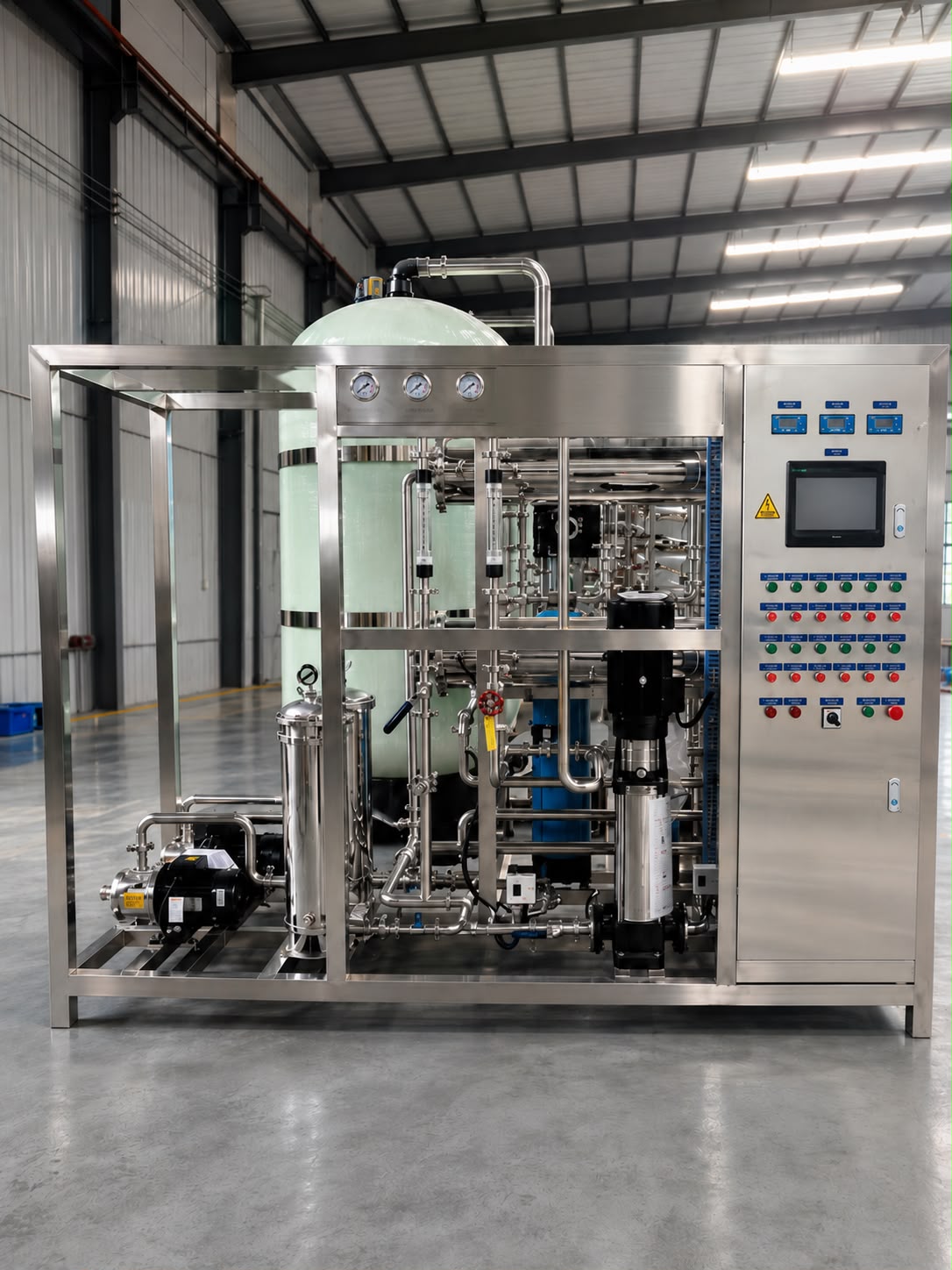
If you run a hotel, a factory, or a processing plant in Dubai, you’ve probably had this conversation with your maintenance team at least once: why does the boiler keep scaling up, why do the chillers need cleaning more often than they should, and why does the drinking water taste different depending on the week. Nine times out of ten, the answer traces back to one thing – the quality of the feed water going into your systems. Dubai’s water supply, whether it comes from the municipal desalinated network, a borehole, or a tanker, rarely stays consistent. TDS levels shift, hardness varies, and summer heat pushes everything to its limit. This is exactly the gap an industrial RO plant is built to close, and it’s why more UAE businesses are treating reverse osmosis as essential infrastructure rather than an optional upgrade. What Is an Industrial RO Plant? Reverse osmosis works by forcing pretreated water through a semi-permeable membrane under pressure. The membrane blocks dissolved salts, minerals, and most contaminants, letting only clean, low-TDS water (the permeate) through, while the concentrated reject water is carried away to drain. A typical treatment line runs from a raw water tank through multimedia filtration, carbon filtration, softening or antiscalant dosing, a fine cartridge filter, and finally the high-pressure RO membrane stage itself, with optional UV or remineralisation afterward. When done properly, this single-stage process rejects 96 to 99% of dissolved salts and contaminants. When done poorly, undersized, badly pretreated, or bought off a generic catalogue, then it becomes a maintenance headache instead of a solution. This is especially important in the UAE, where feed water conditions are rarely straightforward. Every water source has its own challenges, so the system needs to be selected and designed accordingly. Why Dubai’s Water Conditions Make RO Non-Negotiable Three local realities make RO necessary: High and variable TDS. Between desalinated supply, groundwater, and tankered water, total dissolved solids can swing significantly from one source or season to the next. Equipment designed around a single assumed water quality often struggles the moment that assumption stops holding. Summer heat cuts membrane output. RO membranes produce less permeate as the feed water gets warmer. A system sized only against nominal, cooler-weather flow can fall short exactly when demand, such as hotel occupancy or a factory running full shifts, peaks in July and August. Everything downstream depends on it. Boilers, calorifiers, and chillers are all sensitive to what’s feeding them. Hard, high-TDS water scales heat exchange surfaces and steadily eats into efficiency and equipment life, long before anyone notices a drop in output. The Benefits of an Industrial RO Plant 1. Water quality you can actually rely on With online conductivity monitoring and auto-divert built in, an industrial RO system keeps out-of-spec water from ever reaching your process or your taps, regardless of how much feed conditions drift through the day. 2. It protects the equipment you’ve already paid for This is the benefit most businesses discover the hard way. Low-TDS RO water dramatically cuts scale formation in boilers, calorifiers, steam equipment, and heat exchangers. Less scale means better heat transfer, lower energy bills, and equipment that lasts as long as it’s supposed to instead of needing early replacement. 3. Lower cost over the life of the plant A well-designed pretreatment stage, media filtration, carbon, softening, or antiscalant dosing reduces fouling and scaling at the membrane itself. That translates directly into fewer membrane replacements and lower chemical dosing costs over years of operation, not just a lower price tag on day one. 4. High rejection of salts and contaminants Because membrane rejection typically sits at 96–99%, a single RO stage removes the overwhelming majority of dissolved salts, minerals, and contaminants in one pass; no need to stack multiple treatment technologies to hit a usable water quality. 5. Built around UAE operating conditions, not generic specs A properly engineered plant is sized against summer feed-water temperatures, not just a nominal flow rate on a spec sheet. That’s the difference between a system that performs year-round and one that quietly underdelivers for four months of the year. 6. Automation that matches how you actually operate Options range from simple manual or metered control up to full PLC systems with remote monitoring and telemetry. That flexibility means a plant can run with a lean on-site team or largely unattended, depending on what suits your operation. 7. Real water and cost savings through recovery On brackish-water systems, recovery rates of 50–75% are achievable, cutting both reject volume and overall feed-water consumption; a meaningful saving when every cubic metre of feed water has a cost attached to it. 8. Serviceable by design, not as an afterthought CIP connections, isolation valves, and sampling points built in from the start mean membrane cleaning and routine servicing don’t require shutting down the wider plant to get at them. 9. A format that fits your site Skid-mounted, plant-room, or containerised, the right industrial RO system is chosen around your site constraints, not the other way around. A retrofit into an existing building calls for a different format than a fast-track construction site. 10. Supports compliance and sustainability targets Consistent treated-water quality paired with reduced fresh-water draw helps meet authority specifications and green-building or water-efficiency targets – Estidama being a common example on UAE projects. Who Needs an RO System? In practice, the businesses that benefit most from an industrial RO plant in Dubai include hotels and resorts needing potable water polishing and softened water for kitchens, hospitals requiring multi-barrier treatment for CSSD and laboratory use, factories and food processing plants needing consistent process water, laundries relying on softened or RO-fed water for chemical efficiency, and construction sites where a containerised plant delivers temporary potable and batching water without waiting on permanent infrastructure. If your operation depends on a boiler, a calorifier, or a chiller running efficiently day after day, feed water quality is the thing that determines how long that equipment actually lasts. Sizing It Right Before choosing capacity, the key
How to Size a Commercial Boiler: kW, TPH and Load Calculations for UAE Buildings
A facilities manager in Dubai once told his hotel had gone through three boiler replacements in under a decade, not because the equipment kept failing, but because nobody had sized it properly the first time. One unit was too small and struggled through winter mornings. The next was oversized and short-cycled itself into an early grave. The third, finally, got it right. That story isn’t unusual. Sizing gets treated as an afterthought, something the installer figures out on-site, when it’s actually the single decision that determines how much you’ll spend on fuel, repairs, and replacements for the next fifteen years. If you already know how a commercial boiler works mechanically, you can skip ahead; we’ve covered that in detail in our guide on how commercial boiler systems work. This guide is about the number that is important when you’re specifying equipment: how big does it need to be? Why is sizing important? Oversizing feels like the “safe” choice, and salespeople rarely discourage it. But an oversized boiler cycles on and off constantly because it produces more heat than the building needs at any given moment. That short-cycling wears out burners, wastes fuel, and shows up as an unexplained jump in the utility bill. Undersizing is the opposite problem: guests complain about lukewarm showers, kitchens can’t keep up during peak service, and the system runs flat out around the clock trying to catch up. Neither mistake is cheap to fix once the plant room is built around it. kW and TPH Two units come up constantly when you’re comparing boiler quotes, and they confuse almost everyone outside the industry. Kilowatts (kW) measure the rate of heat output – how much energy the boiler can deliver at any moment. A small hotel wing might run comfortably on a 150–300 kW hot water boiler, while a large hospital or manufacturing plant can require several megawatts split across multiple units for redundancy. Tonnes per hour (TPH) is the unit used for steam boilers, and it measures how much steam the boiler can generate in an hour. A 1 TPH boiler produces roughly 1,000 kg of steam per hour, which converts to approximately 700 kW of thermal output; the exact figure shifts depending on operating pressure and feedwater temperature. Industrial laundries, food processing lines, and sterilization units in the UAE typically spec their equipment in TPH rather than kW, simply because that’s the unit their process engineers already work in. If a supplier quotes you one unit and your consultant’s report uses the other, ask for a conversion rather than guessing. Working Out the Actual Heating Load A proper load calculation looks at three things, added together: Skipping any one of these is how undersizing happens. A common shortcut of sizing purely off floor area ignores that a hospital and an office tower of the same square footage have wildly different hot water demands. For anything beyond a small standalone unit, this calculation is worth having an engineer run properly rather than relying on a rule of thumb. It’s a service we handle directly as part of our engineering and installation support for commercial projects across Dubai, Abu Dhabi, and Sharjah. Steam or Hot Water: Which Applies to Your Building? Hotels, residential towers, offices and schools almost always run on hot water boilers, since the end use is showers, taps, space heating and calorifiers feeding hot water storage tanks. Steam boilers show up where the process genuinely needs steam, sterilization in hospitals, humidification, commercial kitchens, or industrial processing lines. If your building falls into the second category, your capacity conversation will be in TPH; almost everyone else should be thinking in kW. Water Quality and TDS Here’s something that rarely comes up until it’s already a problem. Boiler performance depends heavily on feedwater quality, and the key number to watch is TDS: Total Dissolved Solids. A healthy hot water boiler generally sits in the range of 2,000–3,000 ppm TDS, while steam boilers need to be kept tighter, often below 3,500 ppm depending on operating pressure, because dissolved solids concentrate as water boils off and can scale the heat exchanger or foam over into the steam line, according to UAE feedwater, often a mix of desalinated and groundwater sources, varies enough between emirates that it’s worth testing before commissioning, not after the first descale. Proper water treatment for boiler feedwater keeps TDS in range and protects the investment you just spent time sizing correctly. A Note on Boiler Passes You’ll sometimes see boilers described by their number of “passes” – 2-pass, 3-pass, or 4-pass. This refers to how many times combustion gases travel through the boiler before exiting the flue. Each additional pass extracts more heat from the same fuel burn, which is why 4-pass boilers tend to run more efficiently than 2-pass designs, at the cost of a slightly larger footprint. It’s a detail worth asking about when comparing quotes, though it matters less than getting the overall kW or TPH figure right in the first place. Getting It Right the First Time Finding the right commercial boiler size requires careful planning. Between load calculations, unit conversions, fuel choice, and water quality, there are enough variables that a proper assessment pays for itself long before the first service call. If your building already has a boiler and you’re noticing rising fuel bills or inconsistent hot water, it’s worth reading up on routine boiler maintenance, as well as sizing and upkeep tend to go hand in hand. We work with clients across the UAE as part of our standard project scope, whether that’s a new commercial boiler installation or replacing an ageing system that was never sized correctly in the first place. If you’d like a load calculation done properly, get in touch and we’ll guide you. Frequently Asked Questions How many kW is a commercial boiler? It depends entirely on the building. Small commercial units start around 100–150 kW, while hospitals, large hotels and industrial facilities can require several thousand kW split across multiple
Types of Water Chiller Systems
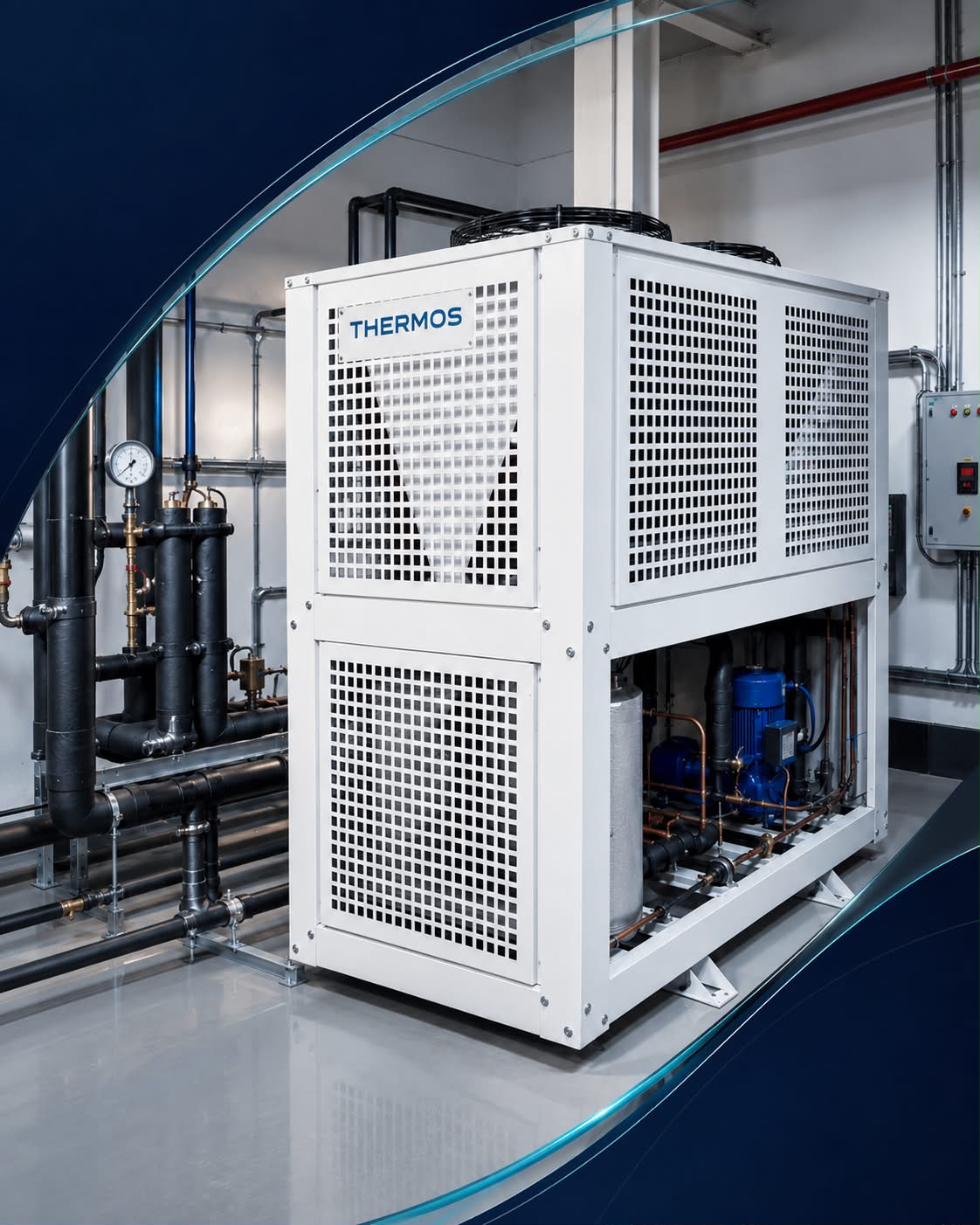
When you ask five different suppliers what chiller you need, you’ll probably get five different answers. That’s because a water chiller system isn’t a single product; it’s an entire category, and picking the wrong type for your application is one of the more expensive mistakes a facility manager can make in the UAE’s climate. This guide explains every major type of chiller system, so you know exactly what you’re comparing before you request a quote. What Is a Water Chiller Used For? A water chiller system removes heat from water or a water-glycol mix and circulates the cooled fluid to wherever temperature control is needed. In practice, that covers a wide range of jobs: cooling industrial machinery, holding process water at a stable temperature, supporting HVAC systems in large buildings, or protecting temperature-sensitive stock in food, beverage, and pharmaceutical facilities. If a process or piece of equipment generates heat and needs to stay within a set range, a chiller is usually in that picture. The Two Main Categories: Air-Cooled vs. Water-Cooled Every chiller type falls into one of two families, based on how it gets rid of the heat it removes. Air Cooled Chiller An air-cooled chiller uses ambient air to reject heat straight from the condenser, with fans doing the work instead of a cooling tower. That makes it compact, simpler to install, and easier to maintain, which is why it’s the default choice for smaller commercial sites and facilities where roof or yard space is available but a dedicated plant room isn’t. On Dubai’s hottest afternoons, when ambient temperatures climb well past 45°C, an air-cooled unit has to work harder than a water-cooled one to deliver the same output. Water Cooling Chiller A water-cooling chiller rejects heat into a cooling tower loop rather than the surrounding air, which makes it noticeably more efficient in hot, high-load environments. It costs more upfront and needs a dedicated plant room plus ongoing water treatment, but for large commercial buildings and heavy industrial sites across the UAE, that efficiency gain usually pays for itself over the system’s lifetime. Chiller Types By Application Chillers get grouped again by what they’re actually cooling. This is where most buyers start narrowing things down. Industrial Water Chiller / Industrial Cooling System An industrial water chiller is built for heavier, continuous-duty loads: manufacturing lines, plastics and injection moulding, printing presses, metal finishing, and similar processes that generate steady heat through a full shift. These units are sized around cooling tons rather than floor space, and reliability tends to matter more than almost anything else, since downtime on a production line is expensive. Anyone researching an industrial cooling system for a factory or warehouse in the UAE is usually looking at this category. Process Cooling Chiller A process cooling chiller does a more specific job: holding a process fluid at a tight, stable temperature rather than just cooling a general space or machine. You’ll find these in laboratories, chemical processing, plastics extrusion, and food and beverage production, anywhere a few degrees of temperature drift can affect product quality or a reaction outcome. Machine Cooling Chiller A machine cooling chiller is sized and configured around a single piece of equipment, or a small cluster of machines, such as CNC equipment, lasers, welding systems, or injection moulding presses, rather than an entire building or process line. These tend to be smaller, often portable units positioned right next to the machine they’re protecting. Glycol Chiller A glycol chiller circulates a water-glycol mixture instead of plain water, which lowers the fluid’s freezing point and lets the system run at sub-zero or near-freezing temperatures without ice forming inside the pipework. This makes it the standard choice for breweries, cold storage support, food processing, and any application that needs chilled fluid below 5°C. Whether it’s a glycol chiller in Abu Dhabi or a brewery setup in Dubai, this is the category to look at whenever a process needs genuinely deep cooling rather than standard air-conditioning-range temperatures. Commercial Chiller A commercial chiller supports the comfort-cooling side of a building, such as hotels, malls, offices, and hospitals, rather than an industrial process. These systems are usually specified alongside the building’s HVAC design, sized to the structure’s cooling load, and chosen with an eye on energy efficiency, since they tend to run for long hours across most of the year in the UAE’s climate. Domestic Water Tank Chiller A domestic water tank chiller is the smallest category on this list, used to cool stored water for residential or light commercial use rather than industrial processes. Villas, staff accommodation blocks, and boutique hospitality properties sometimes use these to keep rooftop tank water at a stable, comfortable temperature instead of letting it heat up under direct sun. What is”Type 3″ Chillers? Type 3 chiller is a refrigerant-handling classification. Under EPA Section 608 in the US, Type 3 designates low-pressure equipment, mainly large centrifugal chillers whose evaporator operates under vacuum. It’s a certification requirement for the technicians servicing that equipment, not a term UAE buyers need to compare when sourcing a system, though it’s useful to recognise if it shows up on an imported spec sheet. So, What’s The Best Water Chiller For Your Application? There isn’t a single “best” chiller, only the best fit for your load, your space, and your budget. As we cover in our guide on choosing the right water chiller for industrial applications, cooling capacity, climate, installation space, and maintenance access all factor into the decision before you even get to comparing brands. A good starting point is matching your chiller type to your application first, industrial, process, machine, glycol, commercial, or domestic, then narrowing down between air-cooled and water-cooled based on your site and budget. Sourcing A Water Chiller Supplier In The UAE Whether you need a glycol chiller in Abu Dhabi, an industrial chiller in Sharjah, or a full commercial chiller system in Dubai, sourcing locally matters more than it might seem. UAE-based suppliers understand the region’s ambient temperature extremes, water quality,