
When businesses start comparing water chillers, one question usually comes up: which water chiller is more efficient? The answer isn’t as simple as choosing one type and calling it the most efficient. A chiller’s efficiency depends on several things, including its design, cooling capacity, operating load, ambient conditions, temperature requirements, maintenance and how well the system is matched to the application. For many large commercial and industrial applications, water-cooled chillers can achieve higher efficiency than air-cooled chillers, particularly when operating under high cooling loads. However, an air-cooled chiller can still be the more practical choice when simpler installation, lower maintenance requirements or limited water availability are important. This is relevant in UAE, where chillers may operate for long periods in high ambient temperatures. So, if you’re comparing a water chiller in UAE for a hotel, commercial building, manufacturing facility or industrial process, it’s worth looking beyond the purchase price and understanding how the system will perform throughout its operating life. What Determines Water Chiller Efficiency? Water chiller efficiency is essentially about how much cooling the system can provide for the amount of energy it consumes. Two commonly used performance measurements are EER (Energy Efficiency Ratio) and COP (Coefficient of Performance). Chiller specifications can also include IPLV (Integrated Part Load Value), which considers performance at different operating loads. This matters because a chiller does not normally operate at 100% capacity all the time. A building might require maximum cooling during the hottest part of the day, but the cooling demand can be considerably lower during other periods. A chiller that performs well at part load can therefore have a significant effect on overall energy consumption. The U.S. Department of Energy’s guidance for electric chillers evaluates both full-load and part-load efficiency and notes that chiller selection should consider the way the equipment is expected to operate. In simple terms: Good chiller efficiency = suitable equipment + correct sizing + efficient operation + proper maintenance. Air-Cooled vs Water-Cooled Chillers The two main chiller categories are air-cooled chillers and water-cooled chillers. The main difference is how they reject the heat removed from the chilled water. An air-cooled chiller rejects heat directly into the surrounding air using condenser coils and fans. A water-cooled chiller transfers heat through a condenser-water circuit, normally connected to a cooling tower or another heat-rejection system. Cauldron supplies both air-cooled and water-cooled chiller systems for commercial, industrial and process cooling applications in the UAE. For a detailed explanation of the two systems, see our guide to Types of Water Chiller Systems. Are Water-Cooled Chillers More Efficient? In many larger applications, yes. Water-cooled chillers generally have an efficiency advantage because water can reject heat more effectively than air under suitable operating conditions. Cooling towers can also reject heat based on the lower outdoor wet-bulb temperature rather than relying entirely on the ambient dry-bulb temperature. The U.S. Department of Energy notes that air-cooled systems can have lower installation and maintenance requirements because they do not require a cooling tower, while water-cooled systems can offer substantially higher efficiency. This can make water-cooled chillers particularly attractive for: However, higher efficiency does not automatically mean a water-cooled chiller is the right choice for every project. When Can an Air-Cooled Chiller Be the Better Choice? Air-cooled chillers have some practical advantages that should not be overlooked. Because they reject heat directly to the surrounding air, they generally do not need a cooling tower or a separate condenser-water circuit. That can simplify the installation. An air-cooled water chiller can therefore be suitable where: For example, a smaller commercial facility may not benefit enough from the efficiency advantage of a water-cooled system to justify the additional cooling tower, pumps, piping and water-treatment requirements. This is why choosing the most efficient chiller on a specification sheet is not always the same as choosing the most suitable system for the project. Why UAE Climate Matters When Choosing a Water Chiller Climate is an important consideration when selecting cooling equipment in the UAE. During the hotter months, outdoor temperatures can become very high. For an air-cooled chiller, this means the condenser has to reject heat against a higher ambient temperature. As the temperature difference becomes less favourable, the system may have to work harder to reject the same amount of heat. Water-cooled systems use a cooling tower and condenser-water loop for heat rejection, which can provide an efficiency advantage under suitable conditions. However, this doesn’t mean that every UAE project should automatically use a water-cooled chiller. The actual decision should consider the project’s cooling load, operating schedule, available space, water requirements, maintenance capability and installation conditions. For this reason, water chiller selection in the UAE should be based on the complete application rather than the chiller type alone. Full-Load Efficiency vs Part-Load Efficiency This is one of the areas that is often overlooked when comparing chillers. A chiller may have a strong full-load efficiency rating, but the equipment could spend much of its operating life at 25%, 50% or 75% load. That’s why part-load performance matters. The Department of Energy’s chiller efficiency guidance uses IPLV to evaluate performance across different load conditions. Imagine a hotel, for example. The cooling requirement may be high during peak afternoon hours but lower during other parts of the day. A chiller that can maintain good efficiency when the cooling demand falls can potentially reduce overall energy consumption. So when comparing two water chillers, don’t only ask: “Which one has the better full-load efficiency?” Also ask: “How efficiently will this chiller operate at the loads we actually expect?” That second question can be much more useful when evaluating long-term operating costs. Does a Larger Water Chiller Mean Better Efficiency? Not necessarily. One of the common mistakes in chiller selection is assuming that bigger equipment automatically provides better performance. An oversized chiller may operate below its intended operating range for much of the time. On the other hand, an undersized chiller may struggle to meet the required cooling load during peak conditions. Correct sizing is therefore an
What Are the Different Types of Industrial Boilers?
Industrial boilers are essential in many manufacturing and processing facilities where reliable heat or steam is required for daily operations. From food processing and pharmaceuticals to chemicals, textiles and large-scale manufacturing, the right boiler system can support production, heating and other industrial processes. But industrial boilers are not all designed the same way. They differ in their construction, fuel source, operating pressure, heat-transfer method and intended application. So, what are the different types of industrial boilers, and how do you know which type is suitable for a particular facility? This guide explains the main types of industrial boilers, how they work, their typical applications and the factors businesses should consider when selecting an industrial boiler system. What Is an Industrial Boiler? An industrial boiler is a heating system designed to generate hot water or steam for industrial processes, heating systems or other high-demand applications. Unlike smaller domestic boilers, industrial boilers are generally designed to operate at larger capacities and under more demanding conditions. Depending on the application, they can provide steam or hot water at specific temperatures and pressures required by the facility. Industrial boilers are commonly used in: The correct boiler depends on the required output, operating conditions, available fuel and the specific industrial process. How Are Industrial Boilers Classified? There are several ways to classify industrial boilers. The most common classifications are based on: Main Types of Industrial Boilers 1. Fire-Tube Boilers Fire-tube boilers are one of the commonly used boiler designs for commercial and industrial applications. In a fire-tube boiler, hot combustion gases pass through tubes that are surrounded by water. Heat from the gases is transferred through the tube walls to the surrounding water, producing hot water or steam. Fire-tube boilers are generally suitable for applications requiring moderate steam or heating capacity. Common applications Fire-tube boilers may be used in: They can be a practical choice where the required pressure and capacity fall within the operating range of the equipment. 2. Water-Tube Boilers Water-tube boilers work in the opposite way. Water flows through tubes that are exposed to hot combustion gases. This design allows water to be heated rapidly and can accommodate higher pressures and larger capacities than many conventional fire-tube systems. Water-tube boilers are therefore commonly considered for larger industrial applications where high steam output or pressure is required. Common applications Water-tube boilers can be used in: 3. Steam Boilers Steam boilers heat water until it produces steam. The steam can then be distributed through a pipe network and used for heating, processing, cleaning or other industrial operations. Steam is particularly useful in industries where thermal energy needs to be transferred efficiently to different parts of a production process. Common applications include: Steam boiler requirements can vary significantly between facilities, so factors such as pressure, steam quality and required output should be considered during system design. 4. Hot Water Boilers Hot water boilers are designed to produce heated water rather than steam. They are commonly used where the facility requires a continuous supply of hot water for heating or industrial processes. Hot water boiler systems can also be integrated with storage tanks, calorifiers, pumps and water-treatment equipment depending on the requirements of the project. Typical applications include: The required water temperature, flow rate and peak demand are important factors when sizing a hot water boiler. 5. Gas-Fired Industrial Boilers Gas-fired industrial boilers use a gaseous fuel, such as natural gas or LPG, to generate heat. They are commonly considered for industrial facilities where a suitable gas supply is available and where reliable heating or steam generation is required. The suitability of a gas-fired boiler depends on factors such as fuel availability, required capacity, operating conditions, emissions requirements and installation conditions. 6. Oil-Fired Industrial Boilers Oil-fired boilers use fuel oil or diesel as their energy source. They may be considered for facilities where liquid fuel is readily available or where a gas connection is not practical. When selecting an oil-fired industrial boiler, businesses need to consider fuel storage, fuel quality, burner requirements, maintenance and operating costs in addition to the required heating capacity. 7. Electric Industrial Boilers Electric boilers use electrical heating elements rather than combustion to generate heat. Because they do not require a conventional combustion burner, they can be useful in certain facilities where gas or liquid fuel is unavailable or where the project has specific operational requirements. Electric industrial boilers may be suitable for selected applications where electrical infrastructure and operating costs make the technology practical. The required electrical capacity should always be considered before selecting this type of system. Industrial Boilers by Application Another useful way to understand industrial boilers is to consider where they are used. Food Processing Food and beverage facilities may require steam or hot water for cooking, heating, cleaning and processing. The boiler system needs to provide reliable thermal energy while meeting the facility’s operating and hygiene requirements. Pharmaceutical Manufacturing Pharmaceutical production can require controlled heating and steam for processes such as sterilisation, cleaning and manufacturing. Boiler selection in these environments needs to consider the required steam quality, pressure, temperature and process conditions. Textile Industry Textile manufacturing can use steam and hot water for various processes, including washing, dyeing, drying and finishing. The boiler must therefore be capable of providing consistent thermal output according to the production requirements. Chemical Industry Chemical processing facilities can have demanding heating requirements. Steam or hot water may be used for heating vessels, maintaining process temperatures and other production operations.The boiler design needs to be selected according to the process temperature, pressure and required thermal load. Hotels and Large Commercial Facilities Although hotels are not traditionally considered manufacturing facilities, large hospitality properties can have significant hot-water requirements. Boilers may supply hot water for: For these projects, the boiler may work alongside calorifiers, hot-water storage tanks and water-treatment systems. Fire-Tube vs Water-Tube Industrial Boilers Fire-tube and water-tube boilers are two of the most important industrial boiler designs, but they are suited to different operating requirements. Feature Fire-Tube Boiler Water-Tube Boiler Heat-transfer arrangement Hot
How Much Does a Water Chiller Cost in the UAE?
If you are planning to install a water chiller for a hotel, factory, commercial building or industrial facility, one of the first questions you will probably ask is: How much does a water chiller cost in the UAE? The short answer is that there is no single price for every water chiller. The cost depends on factors such as cooling capacity, chiller type, application, operating conditions, installation requirements and the level of customization needed. A small commercial system and a large industrial water chiller can have very different requirements, so choosing a chiller based only on its initial price can sometimes lead to higher operating and maintenance costs later. In this guide, we explain the main factors that affect water chiller prices in the UAE and what you should consider before requesting a quotation. What Is a Water Chiller? A water chiller is a cooling system that removes heat from water or a water-glycol mixture and circulates the cooled liquid through a building, equipment or industrial process. Water chillers are commonly used for: Depending on the application, a project may require an air-cooled chiller, water-cooled chiller, glycol chiller or a customized process cooling system. For a more detailed overview of available systems, you can explore Cauldron’s Water Chiller Systems & Industrial Cooling Solutions in UAE. How Much Does a Water Chiller Cost in the UAE? The price of a water chiller in the UAE varies considerably from one project to another. Rather than looking for a fixed price, it is better to consider the complete system requirement. A quotation may include the chiller unit itself, accessories, controls, installation, commissioning and other project-specific requirements. The following factors can have a major effect on the final cost. 1. Cooling Capacity Cooling capacity is one of the most important factors affecting water chiller price. A chiller designed for a small application will generally require less capacity than one serving a large hotel, manufacturing facility or industrial process. The required capacity depends on the actual cooling load of the application. Selecting a unit that is too small can result in poor cooling performance, while unnecessarily oversizing the system can increase the initial investment and operating costs. For this reason, cooling requirements should be assessed before selecting a water chiller. 2. Air-Cooled vs Water-Cooled Chiller The type of chiller also affects the overall project cost. Air-cooled chillers reject heat directly to the surrounding air and can be a practical option where installation space and water availability are important considerations. Water-cooled chillers transfer heat through a separate water circuit and are commonly used for larger commercial and industrial applications. The right choice depends on the cooling load, available space, project design, operating conditions and long-term maintenance requirements. 3. Application and Operating Conditions A water chiller used for a commercial building may have different requirements from one used for manufacturing or process cooling. For example, industrial processes may require: These requirements can affect the final system specification and price. 4. Installation and Commissioning The cost of the chiller is only one part of the project. Depending on the site, the installation may require piping, pumps, electrical connections, controls, insulation and other supporting equipment. Commissioning is also important because the system needs to be correctly configured and tested before regular operation. A professional supplier should therefore consider the complete project rather than quoting only the equipment price. Does a More Expensive Water Chiller Mean Better Performance? Not necessarily. The most expensive system is not automatically the best choice for every project. What matters is whether the chiller is correctly sized and suitable for the application. For example, investing in a highly customized industrial system may make sense for a manufacturing facility with demanding process cooling requirements. However, a different solution may be more practical for a smaller commercial application. When comparing quotations, look beyond the initial price and consider: A lower purchase price may not always mean a lower overall cost of ownership. Water Chiller Price vs Long-Term Operating Cost For businesses, the initial purchase price is only part of the investment. A chiller can operate for many years, so energy consumption, maintenance and reliability can have a significant effect on the total cost over its operating life. An appropriately sized and efficiently operated water chiller can help businesses maintain stable cooling while avoiding unnecessary energy consumption. Regular maintenance is also important. Problems such as poor heat transfer, dirty components, incorrect water treatment or mechanical issues can affect chiller performance over time. Cauldron also provides engineering, installation and technical services for water chiller systems, including installation, commissioning, maintenance and technical support. How to Choose the Right Water Chiller for Your Project Before requesting a quotation, it helps to have some basic information about your project. A chiller supplier may need to know: Providing accurate information allows the supplier to recommend a system that matches the actual cooling requirement. For projects involving existing equipment, a site assessment can also help identify whether you need a new system, replacement chiller or retrofit solution. Why Water Quality Matters for Chiller Performance Water quality is another factor that should not be overlooked. Scaling, corrosion and poor water quality can affect cooling equipment and reduce system efficiency over time. Appropriate water treatment can help protect equipment and maintain reliable operation. For larger commercial and industrial projects, Cauldron also provides water filtration and treatment solutions designed to support heating, cooling and water-treatment systems. Water treatment chemicals can also be used to help control scaling and corrosion in suitable applications. You can learn more about Cauldron’s water treatment chemicals. Conclusion There is no universal water chiller price in the UAE because every project has different cooling requirements. The right system depends on factors such as cooling capacity, chiller type, application, operating conditions, installation requirements and long-term performance. Instead of choosing a chiller based purely on the lowest quotation, consider the complete value of the system, including energy efficiency, reliability, maintenance and technical support. If you are planning a commercial or industrial cooling project, contact
Why Do Boilers Fail? Common Causes of Boiler Failure
A boiler can run reliably for years, but that does not mean it is immune to problems. In commercial and industrial buildings, boilers often operate for long hours and under demanding conditions. Over time, poor water quality, lack of maintenance, component wear, incorrect settings, and operating issues can affect performance and eventually lead to a breakdown. A boiler failure is more than an inconvenience. For a hotel, hospital, residential tower, factory or commercial building, a boiler problem can interrupt hot water supply, affect operations and increase repair costs. So, why do boilers fail? Many boiler failures can be prevented when early warning signs are identified and routine maintenance is carried out properly. 1. Poor Water Quality Water quality is one of the most important factors affecting boiler performance. Untreated or poorly treated water can contain minerals and impurities that contribute to scale buildup and corrosion inside the boiler and connected pipework. Scale can act as an insulating layer, reducing heat transfer and forcing the boiler to work harder to achieve the required temperature. Over time, this can reduce efficiency, increase energy consumption and put additional stress on components. For commercial and industrial boiler systems, appropriate water filtration and treatment should therefore be considered part of the overall maintenance strategy. 2. Scale Buildup Mineral deposits can accumulate on heat-transfer surfaces, particularly when the system is exposed to hard water. As scale builds up, heat does not transfer as efficiently. The boiler may need to operate for longer periods to produce the same amount of hot water, increasing fuel consumption and thermal stress. Heavy scaling can also restrict water flow and contribute to overheating. Regular water-quality monitoring and suitable treatment can help reduce this risk. 3. Corrosion Corrosion can gradually damage the internal components of a boiler and associated pipework. It can be caused or accelerated by unsuitable water chemistry, oxygen in the system, poor treatment and prolonged exposure to moisture. Because corrosion can develop gradually, it may not be obvious until there is a leak, pressure problem or component failure. Preventive inspections and proper water treatment can help identify and control corrosion before it becomes a major problem. 4. Burner Problems For fuel-fired boilers, the burner is critical to efficient and safe operation. A burner that is dirty, incorrectly adjusted or experiencing a fuel-supply problem may not produce the correct combustion conditions. This can lead to poor performance, higher fuel consumption, unstable operation or repeated shutdowns. Regular inspection of burners, fuel systems and combustion controls is therefore an important part of commercial boiler maintenance. 5. Pressure Problems Boilers operate within specific pressure and temperature parameters. Problems with pressure can indicate an underlying issue with the system. Unusual pressure fluctuations may be associated with leaks, circulation problems, expansion-system issues, faulty controls or other component failures. A pressure alarm or safety shutdown should not simply be ignored or repeatedly reset. It is important to identify the reason for the problem before returning the boiler to normal operation. 6. Poor Water Circulation A boiler needs adequate water circulation to transfer heat effectively. Blocked pipes, pump problems, valves that are not operating correctly, air in the system or excessive scale can interfere with circulation. Poor circulation can create uneven heating and increase thermal stress on the boiler. For larger commercial systems, checking pumps, valves, pipework and system controls should form part of regular inspection and maintenance. 7. Faulty Controls and Sensors Modern commercial boilers rely on controls, sensors and safety devices to regulate temperature, pressure, combustion and overall operation. When a sensor or control component develops a fault, the boiler may behave unpredictably or shut down as a safety precaution. A control fault may sometimes appear to be a major boiler failure when the underlying problem is actually a relatively small component. Proper diagnosis is therefore important before replacing major equipment. 8. Leaks and Component Wear Boilers and their associated systems contain numerous components that experience continuous heat, pressure and mechanical stress. Seals, valves, pumps, connections and other components can wear over time. Small leaks should not be ignored, even when the boiler continues to operate. A minor leak can become a larger failure and may also contribute to pressure loss, water damage or corrosion. 9. Incorrect Boiler Sizing Not every boiler failure is caused by a damaged component. An incorrectly sized boiler can also create long-term operational problems. If a boiler is too small for the building’s hot water or heating demand, it may operate continuously or struggle during periods of peak demand. On the other hand, an oversized boiler may cycle more frequently than necessary, which can affect efficiency and equipment life. Proper load calculations and system design are therefore important when selecting a new boiler or replacing an existing one. For commercial projects, boiler sizing should take into account factors such as building use, hot water demand, peak load, fuel type, operating conditions and future requirements. You can also read in details on How to Size a Commercial Boiler. 10. Lack of Preventive Maintenance Perhaps the biggest reason boiler problems become serious is that early warning signs are overlooked. A boiler does not always fail suddenly. Changes in performance can appear weeks or months before a major breakdown. Warning signs may include: Regular preventive maintenance gives facility teams an opportunity to identify these issues before they result in unexpected downtime. How Can You Prevent Boiler Failure? There is no single maintenance task that guarantees a boiler will never fail. Instead, reliable boiler operation depends on looking after the entire system. A preventive maintenance programme should generally include: The exact maintenance requirements will depend on the boiler type, fuel, capacity, operating conditions and application. When Should You Repair or Replace a Boiler? A breakdown does not automatically mean that a boiler needs to be replaced. If the problem is caused by a worn component, control fault, burner issue or maintenance problem, repair may be the most practical solution. However, repeated breakdowns can be a sign that the equipment is reaching the end
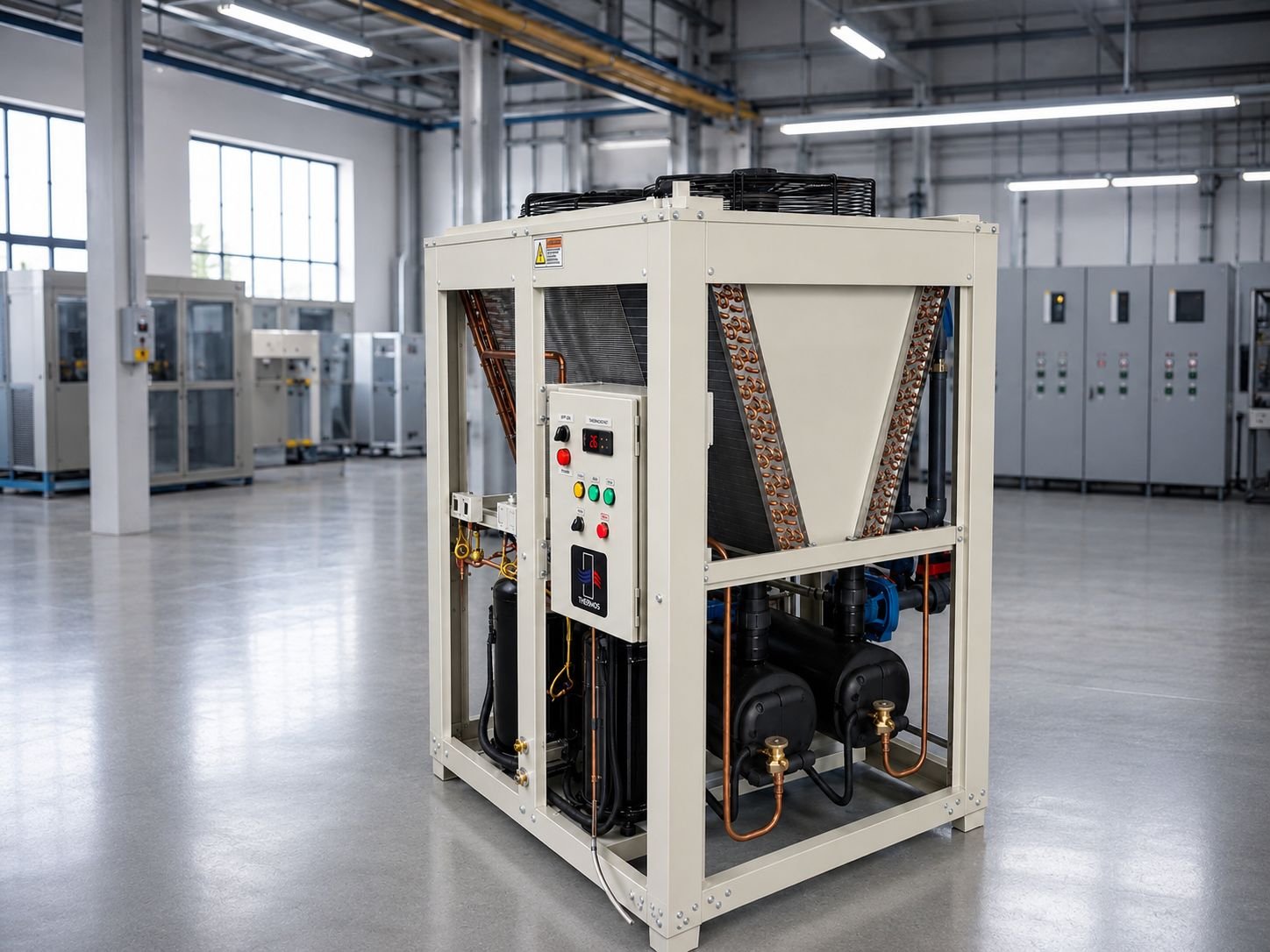
Water Chiller vs AC in Dubai: Which One Is Better for Your Property?
When choosing a cooling system in Dubai, the question is not always as simple as “Which AC should I install?” For a villa or small office, a conventional air-conditioning system may be perfectly suitable. But when the requirement involves a large commercial building, hotel, industrial facility, manufacturing process or even cooling a large water tank, a water chiller system can be a more practical solution. This is where the difference between an AC system and a water chiller becomes important. Both systems remove heat, but they are designed for different applications. So, are chillers better than AC? Not necessarily. The better option depends on the size of the property, cooling requirement, operating conditions and what exactly needs to be cooled. Let’s look at the difference. What Is a Water Chiller? A water chiller is a cooling machine that removes heat from water or a water-glycol mixture and circulates the cooled liquid through a system. In a typical chilled-water HVAC application, the chilled water travels to air handling units (AHUs) or fan coil units, where it helps cool the air inside a building. Water chillers can also be used for process cooling, equipment cooling and water tank cooling, depending on the system design. In the UAE, chiller systems are commonly considered for applications where reliable and continuous cooling is required across larger spaces or industrial processes. How Is a Water Chiller Different From AC? The simplest way to understand the difference is this: An AC system primarily cools air, while a water chiller cools water or a water-glycol mixture that can then be used for cooling. For example, a split AC takes warm indoor air, removes heat from it and returns cooler air to the room. A chilled-water system works differently. The chiller produces chilled water, and pumps circulate that water to cooling equipment throughout the building or process. This makes chillers particularly useful when cooling needs extend beyond one or two individual rooms. Comparison of Water Chiller vs AC: Feature Water Chiller Conventional AC Primary cooling medium Water / water-glycol Refrigerant / air Typical application Large buildings, industries, processes Homes, offices, individual rooms Centralised cooling Yes Usually limited Large cooling loads Well suited Depends on system Process cooling Yes Generally not the preferred solution Water tank cooling Can be designed for it Not normally used directly Installation complexity Higher Generally simpler Best suited for Commercial & industrial applications Residential & smaller spaces Are Chillers Better Than AC? This is one of the most common questions people ask when comparing cooling systems. The answer is not always. A water chiller can be a better choice when a building or industrial process requires centralised, continuous or high-capacity cooling. For example, a hotel with multiple areas requiring simultaneous cooling may benefit from a central chilled-water system rather than installing numerous individual AC units. Similarly, a manufacturing facility may need chilled water to maintain the temperature of equipment or a production process. In this situation, a standard AC system isn’t designed to perform the same job. On the other hand, installing a large chiller for a small villa or single office may be unnecessary. A chiller may be suitable when you need: When Should You Choose a Water Chiller System in Dubai? Dubai’s climate places significant demands on cooling equipment, particularly during the hottest months. However, the outdoor temperature alone should not determine which cooling system you choose. The cooling load, application, operating hours, available space, water requirements and required temperature should all be considered. A water chiller system in Dubai may be appropriate for: Hotels and Hospitality Hotels require reliable cooling across guest rooms, restaurants, kitchens, common areas and other facilities. Centralised cooling can be useful for managing these larger and varying loads. Commercial Buildings Large offices, retail facilities and commercial developments can use chilled-water systems to distribute cooling across multiple areas. Manufacturing Facilities Industrial processes often require controlled temperatures. A water chiller can provide chilled water directly to machinery or production processes. Food and Beverage Facilities Certain food and beverage operations require controlled process temperatures. Depending on the application, a chiller or glycol chiller can provide the required cooling medium. Hospitals and Healthcare Facilities Healthcare facilities have demanding environmental control requirements and may use central cooling systems for different areas of a building. Industrial and Process Cooling Where machinery or a manufacturing process generates significant heat, a dedicated water chiller can help maintain the required operating temperature. To know more, read our article on Uses of water chiller. What About Water Tank Cooling? This is an important application that is sometimes confused with normal building air conditioning. A water tank cooling system in Dubai is designed to maintain the temperature of stored water. For example, certain residential, hospitality or commercial applications may require water to be cooled before it is supplied or used. A dedicated water tank chiller in Dubai can circulate water through a cooling system, remove heat and return the cooled water to the tank. This is different from using an AC system to cool the surrounding room. The system needs to be selected according to factors such as: What Types of Chiller Systems Are Available? The two major categories are air-cooled and water-cooled chillers. Air-Cooled Chillers Air-cooled chillers reject heat directly to the surrounding air using condenser coils and fans. They can be useful where a cooling tower or large water-based heat rejection system isn’t practical. Water-Cooled Chillers Water-cooled chillers transfer heat to a separate water circuit, which typically rejects the heat through equipment such as a cooling tower. They are commonly considered for larger cooling applications where efficiency and capacity are important. The choice between air-cooled and water-cooled equipment should be based on the project’s cooling load, site conditions, available utilities and operating requirements rather than simply choosing one type over another. To learn in detail, read our article on Types of water chillers. What Should You Consider Before Buying a Water Chiller in the UAE? Choosing a chiller shouldn’t start with the question, “How much does
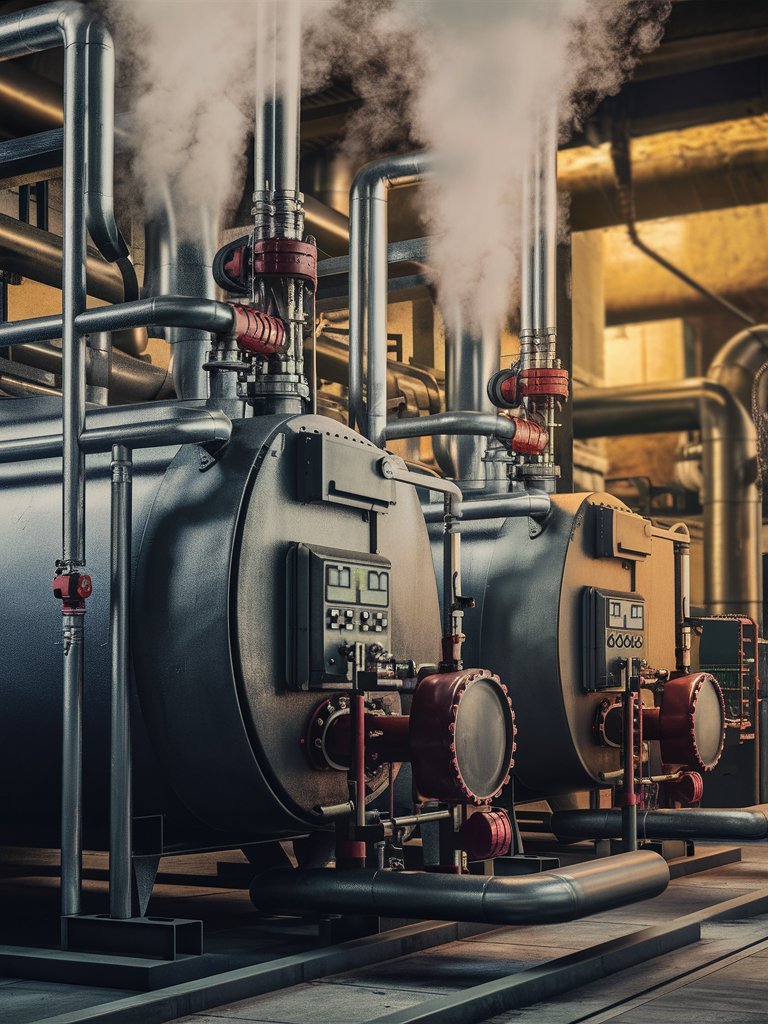
What Is TDS in Boiler Water? Why Is It Important for Boiler Performance
Boilers need water to produce hot water or steam, but not all water is suitable for continuous boiler operation. Water naturally contains dissolved minerals and other substances. When this water is heated inside a boiler, some of these dissolved substances can become concentrated. Over time, this can affect boiler efficiency, increase maintenance requirements and contribute to problems such as scaling and corrosion. This is where TDS in boiler water becomes important. TDS, or Total Dissolved Solids, is an important water-quality parameter that commercial and industrial facilities monitor to help maintain reliable boiler performance. In this guide, we explain what TDS means, why is it important, what happens when boiler water TDS becomes too high, and how proper water treatment and blowdown can help maintain the system. What Does TDS Mean in Boiler Water? TDS stands for Total Dissolved Solids. It refers to the concentration of dissolved substances present in water. These can include minerals, salts and other dissolved materials. When water enters a boiler, these dissolved substances do not simply disappear when the water is heated. As steam is generated and leaves the system, many dissolved solids remain behind in the boiler water. As a result, the concentration of dissolved solids can gradually increase. This is why monitoring boiler water TDS is an important part of boiler water management. The actual acceptable TDS level depends on the boiler design, operating pressure, water chemistry and manufacturer’s recommendations. There is no single TDS value that is suitable for every boiler. Why Is TDS Important in a Boiler? Maintaining appropriate TDS levels helps support the overall performance and reliability of a boiler. If dissolved solids become excessively concentrated, they can contribute to several operational problems. 1. Scaling High concentrations of certain dissolved minerals can contribute to deposits forming on heat-transfer surfaces. These deposits act as an insulating layer between the heat source and the water. As a result, the boiler may require more energy to transfer the same amount of heat. Over time, excessive scale can reduce efficiency and increase operating costs. 2. Corrosion Poorly controlled boiler water chemistry can contribute to corrosion of internal components. Corrosion can weaken metal surfaces and, if left untreated, may eventually lead to leaks, component damage and unplanned downtime. TDS is only one part of boiler water chemistry, so it should be considered alongside parameters such as pH, alkalinity, hardness, conductivity, dissolved oxygen and other relevant water-quality measurements. 3. Reduced Boiler Efficiency A boiler works by transferring heat efficiently from the heat source to the water. When deposits build up on heat-transfer surfaces, this process can become less efficient. The boiler may need to consume more fuel to achieve the required output. For commercial facilities operating boilers for long hours, even relatively small efficiency losses can become significant over time. 4. Carryover and Steam Quality Problems In steam-generating boilers, excessively high dissolved solids can contribute to foaming and carryover. Carryover occurs when water droplets containing dissolved solids are carried along with the steam. This can affect steam quality and may create problems for downstream equipment and processes. For industries that depend on clean and reliable steam, maintaining appropriate boiler water chemistry is therefore particularly important. What Causes TDS to Increase in Boiler Water? TDS levels can increase naturally during boiler operation. The main reason is evaporation. When water inside the boiler is heated, part of it turns into steam. The steam leaves the boiler, while many dissolved solids remain in the water. As more steam is produced, the concentration of dissolved solids in the remaining boiler water can increase. Other factors can also contribute, including: This is why boiler water quality needs to be managed from the point where water enters the system, not only after problems appear. What Happens If TDS Is Too High in Boiler Water? When TDS rises beyond the appropriate operating range, the boiler can become more difficult to operate efficiently. Potential problems include: The exact impact depends on the boiler type, operating pressure, feedwater quality and overall water-treatment program. For this reason, simply asking whether a particular TDS number is “high” is not enough. The acceptable range should be determined based on the boiler manufacturer’s specifications and the facility’s water-treatment requirements. How Is TDS Controlled in a Boiler? There are several ways to control TDS in boiler water. Boiler Blowdown One of the most common methods is boiler blowdown. Blowdown involves removing a controlled amount of concentrated boiler water from the system and replacing it with treated feedwater. This helps reduce the concentration of dissolved solids inside the boiler. Blowdown can be carried out manually or through an automated system, depending on the boiler and installation. The goal is to maintain water chemistry within the recommended operating range without unnecessarily wasting water, energy or treatment chemicals. Feedwater Treatment Controlling the quality of water entering the boiler is equally important. Depending on the source water and boiler requirements, treatment may include processes such as: A properly designed water treatment system can help reduce the contaminants entering the boiler and support better overall boiler water quality. TDS vs Conductivity: TDS and conductivity are related, but they are not the same thing. TDS represents the concentration of dissolved substances in water, while electrical conductivity indicates how easily water conducts electricity. Because dissolved ions increase conductivity, conductivity is often used as a practical way to monitor changes in dissolved solids. In many boiler-water management systems, conductivity measurements can therefore be used to help monitor TDS and control blowdown. However, the relationship between conductivity and TDS depends on the composition of the water, so the two measurements should not automatically be treated as identical. How Is TDS Measured in Boiler Water? TDS can be measured using a TDS meter or estimated through conductivity measurement, depending on the application and monitoring system. For commercial and industrial boiler systems, water testing may involve much more than TDS alone. A comprehensive boiler water analysis may include: Regular testing helps identify changes in water chemistry before they develop into larger
7 Signs Your Water Chiller Needs Maintenance or Replacement
A water chiller plays an important role in maintaining the right temperature in commercial buildings, industrial facilities, hotels, manufacturing plants, and other demanding applications. When the system is working efficiently, it helps maintain consistent cooling and supports smooth day-to-day operations. However, like any mechanical equipment, a water chiller can gradually lose efficiency over time. Ignoring early warning signs may lead to higher energy consumption, unexpected breakdowns, expensive repairs, and operational downtime. So, how do you know when your water chiller simply needs maintenance and when it may be time to consider replacement? Here are seven important signs to look out for. 1. Your Water Chiller Is Not Cooling Efficiently One of the most obvious signs of a problem is when the water chiller is unable to maintain the required temperature. You may notice: Reduced cooling performance can occur for several reasons, including refrigerant issues, dirty heat exchangers, compressor problems, poor water flow, or incorrect system sizing. A professional inspection can help identify whether the issue can be resolved through maintenance or whether the existing water chiller is no longer suitable for the cooling load. 2. Energy Consumption Has Increased If your electricity costs have increased without a major change in your cooling requirements, your water chiller system could be consuming more energy than necessary. As equipment ages, components may become less efficient. Scaling, fouling, worn components, refrigerant issues, and poor maintenance can all affect the system’s energy performance. Regular maintenance can help improve efficiency by ensuring that important components are inspected and cleaned. However, if an older unit continues to consume excessive energy even after proper servicing, upgrading to a newer and more efficient water chiller may provide better long-term value. 3. Water Chiller Requires Frequent Repairs An occasional repair is normal. However, frequent breakdowns are a clear warning sign that the system may be reaching the end of its reliable operating life. Common issues may include: When repair costs start increasing year after year, it is worth comparing the cost of continued repairs with the benefits of replacing or upgrading the system. For commercial and industrial facilities, unexpected downtime can also affect production, building operations, and overall business performance. 4. You Notice Unusual Noise or Vibration A properly operating water chiller should not suddenly become significantly louder or produce excessive vibration. Unusual sounds can indicate problems with components such as: Ignoring unusual noise can allow a small problem to develop into a more serious and expensive failure. Early inspection and maintenance can help identify the cause before it affects the entire cooling system. 5. Your Cooling Requirements Have Changed Your existing water chiller may have been correctly sized when it was first installed, but your cooling requirements may change over time. For example: In these situations, the existing water chiller may no longer have the capacity required to deliver consistent cooling. Similarly, an oversized chiller may operate inefficiently if the actual cooling load has significantly decreased. A professional cooling load assessment can help determine whether your existing system is appropriately sized or whether a replacement or customised solution is required. 6. Water Quality Is Affecting System Performance Water quality is an important factor in the long-term performance of a water chiller system. Poor water quality can contribute to: When heat exchangers and other components are affected by scale or deposits, the water chiller has to work harder to achieve the required cooling performance. Proper water treatment and regular system maintenance can help protect the equipment and improve operational efficiency. For facilities using cooling systems alongside other water-based equipment, an integrated approach involving water treatment, filtration, and system maintenance can help support better long-term performance. 7. Your Water Chiller Is Old and Becoming Less Reliable Even a well-maintained water chiller will eventually reach a stage where replacement becomes a more practical option. Older systems may face issues such as: Before replacing the system, it is important to assess the condition of the existing equipment, current cooling requirements, energy performance, and future operational needs. In some cases, a retrofit or replacement can provide improved efficiency while allowing the new system to integrate with existing infrastructure. Should You Repair or Replace Your Water Chiller? The right decision depends on several factors. Maintenance or repair may be the best option when: Replacement may be worth considering when: A technical assessment can help you make a decision based on the actual condition and performance of your water chiller rather than replacing equipment unnecessarily. Choosing the Right Water Chiller for Your Application When replacing or upgrading a system, selecting the right water chiller is essential. Important factors include: Cooling Capacity The chiller should be correctly sized according to the actual cooling load. An undersized system may struggle to maintain temperature, while an oversized unit may lead to unnecessary energy consumption. Type of Chiller Depending on the application and site conditions, you may need to choose between different cooling configurations, including: Operating Environment In the UAE, high ambient temperatures can place significant demands on cooling equipment. The selected system should be suitable for the local operating conditions and the specific requirements of the facility. Application Requirements Different industries have different cooling requirements. A water chiller used for industrial process cooling may require different specifications compared to a system installed for a hotel, commercial building, or water tank cooling application. Maintenance and Technical Support Reliable after-sales support, maintenance services, and access to spare parts are important considerations when selecting a water chiller for long-term use. Best Water Chiller Solutions in the UAE Regular maintenance and timely inspections can help identify potential problems before they lead to major equipment failures. When replacement or an upgrade becomes necessary, selecting a correctly sized and professionally designed system can improve cooling performance, reliability, and long-term efficiency. Cauldron provides water chiller systems for commercial, industrial, and process cooling applications across the UAE. From equipment selection and customised solutions to installation, commissioning, retrofit projects, and technical support, the right approach depends on your specific cooling requirements. If your existing water chiller is
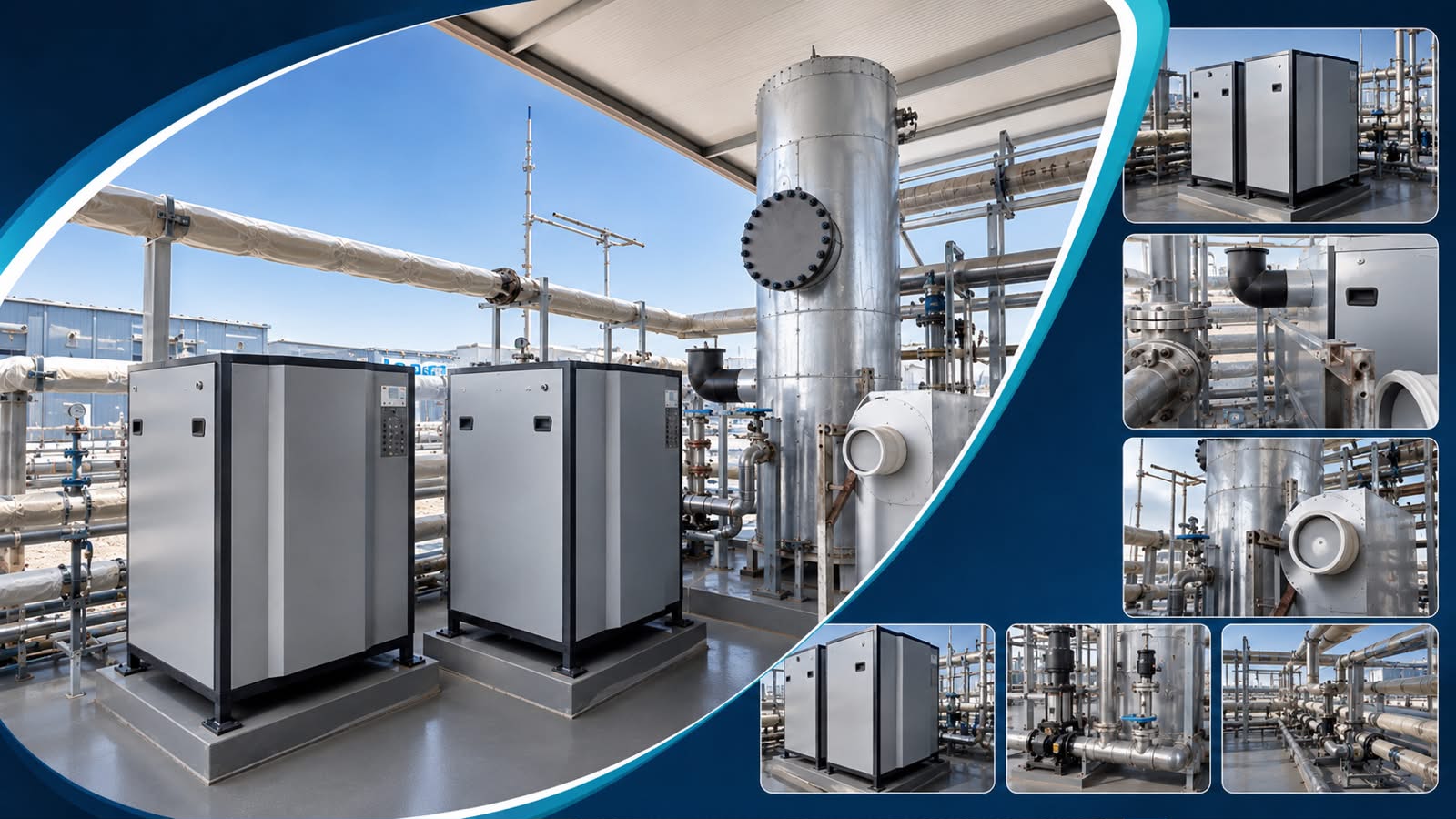
What Is the Difference Between a Calorifier and a Boiler?
If you are planning a hot water system for a hotel, hospital, residential building or industrial facility, you may come across two terms that are often used together: calorifier and boiler. Because both are part of a hot water system, it is easy to assume they do the same job. But they don’t. The simplest way to understand the difference is this: A boiler generates heat. A calorifier stores and supplies hot water. In many commercial and industrial applications, the two systems work together. The boiler produces the heat, while the calorifier stores the heated water and makes it available when demand increases. Let’s take a closer look at how each system works and when you may need these. What Is a Boiler? A boiler is a heating system designed to heat water or generate steam. Depending on the type of system, it may use diesel, LPG, natural gas or electricity as its energy source. The heated water or steam can then be used for several purposes, including: In a large hotel, for example, the boiler may provide the heat required to support the building’s hot water system. In an industrial facility, it may also provide steam or hot water for manufacturing and processing operations. The key role of a boiler is therefore heat generation. For a more detailed look at boiler types and applications, you can explore Cauldron’s commercial boiler solutions. What Is a Calorifier? A calorifier is a hot water storage vessel designed to store a large volume of heated water for later use. Unlike a boiler, a calorifier does not necessarily generate heat by burning fuel. Instead, it receives heat from another source. Depending on the system design, a calorifier can be heated using: The heated water is stored inside the calorifier and supplied when required. This makes calorifiers particularly useful in buildings where hot water demand can change throughout the day. For example, a hotel may experience its highest hot water demand in the morning when hundreds of guests are showering at roughly the same time. A properly sized calorifier helps ensure that sufficient hot water is available during these peak periods. Calorifier vs Boiler: Here is a simple comparison between the two: Feature Calorifier Boiler Main purpose Stores and supplies hot water Generates heat or steam Heat generation Usually receives heat from another source Produces heat using fuel or electricity Water storage Yes, typically designed for hot water storage Usually focused on heating rather than storage Energy source Can work with boilers, heat pumps, solar or electricity Can use gas, LPG, diesel or electricity Common applications Hotels, hospitals, residential towers and commercial buildings Hotels, hospitals, industrial facilities and heating systems Can work together? Yes Yes The easiest way to remember the difference is: The boiler is the heat source, while the calorifier is the hot water storage system. How Does a Boiler and Calorifier Work Together? In many commercial hot water systems, a boiler and calorifier are part of the same setup. A normal system works like this: This arrangement helps buildings handle periods of high demand without requiring the boiler to respond instantly to every increase in hot water usage. For example, in a hotel, guests may create a sudden peak in demand during the morning. The calorifier acts as a thermal storage system, ensuring hot water is already available when it is needed. When Do You Need a Boiler? A boiler may be the right solution when your facility needs a reliable source of heat for: The correct boiler capacity depends on factors such as the building’s hot water demand, operating hours, peak load and the intended application. For larger projects, proper boiler sizing is especially important. An undersized system may struggle during peak demand, while an oversized system can lead to unnecessary capital and operating costs. When Do You Need a Calorifier? A calorifier is generally useful when your building requires large volumes of stored hot water. Common applications include: A calorifier can be particularly valuable where hot water demand is not constant throughout the day. Instead of relying entirely on instant water heating, the system stores heated water and makes it available when demand increases. This can help improve system reliability and support consistent hot water availability in large buildings. Can a Calorifier Work Without a Boiler? Yes. A calorifier does not always need to be connected to a boiler. Depending on the project requirements, the heat source may be: For example, a building using renewable energy may use solar water heating or heat pumps to provide the heat required by the calorifier. This flexibility is one reason calorifiers are widely used in commercial and industrial hot water systems. Which Is Better: A Calorifier or a Boiler? This is not really a case of choosing one over the other. A calorifier and a boiler perform different functions. If your main requirement is to generate heat, you may need a boiler. If you need to store and supply large volumes of hot water, you may need a calorifier. In many large commercial and industrial projects, the most effective solution involves both systems working together. The right configuration will depend on several factors, including: For this reason, system design should consider the complete hot water demand rather than selecting a boiler or calorifier based on capacity alone. Choosing the Right Hot Water System for Your Building A hotel with hundreds of rooms will have very different hot water requirements from a small commercial building. Similarly, a hospital or industrial facility may require continuous hot water availability, backup capacity and specialised system controls. Before selecting a system, it is important to understand: How much hot water is required?This includes both daily consumption and peak demand. When is the highest demand?Morning and evening peaks can significantly affect system sizing. What energy source is available?The system may use LPG, diesel, electricity, solar energy or heat pump technology. Does the building need hot water storage?Large facilities often benefit from a properly sized calorifier to manage peak
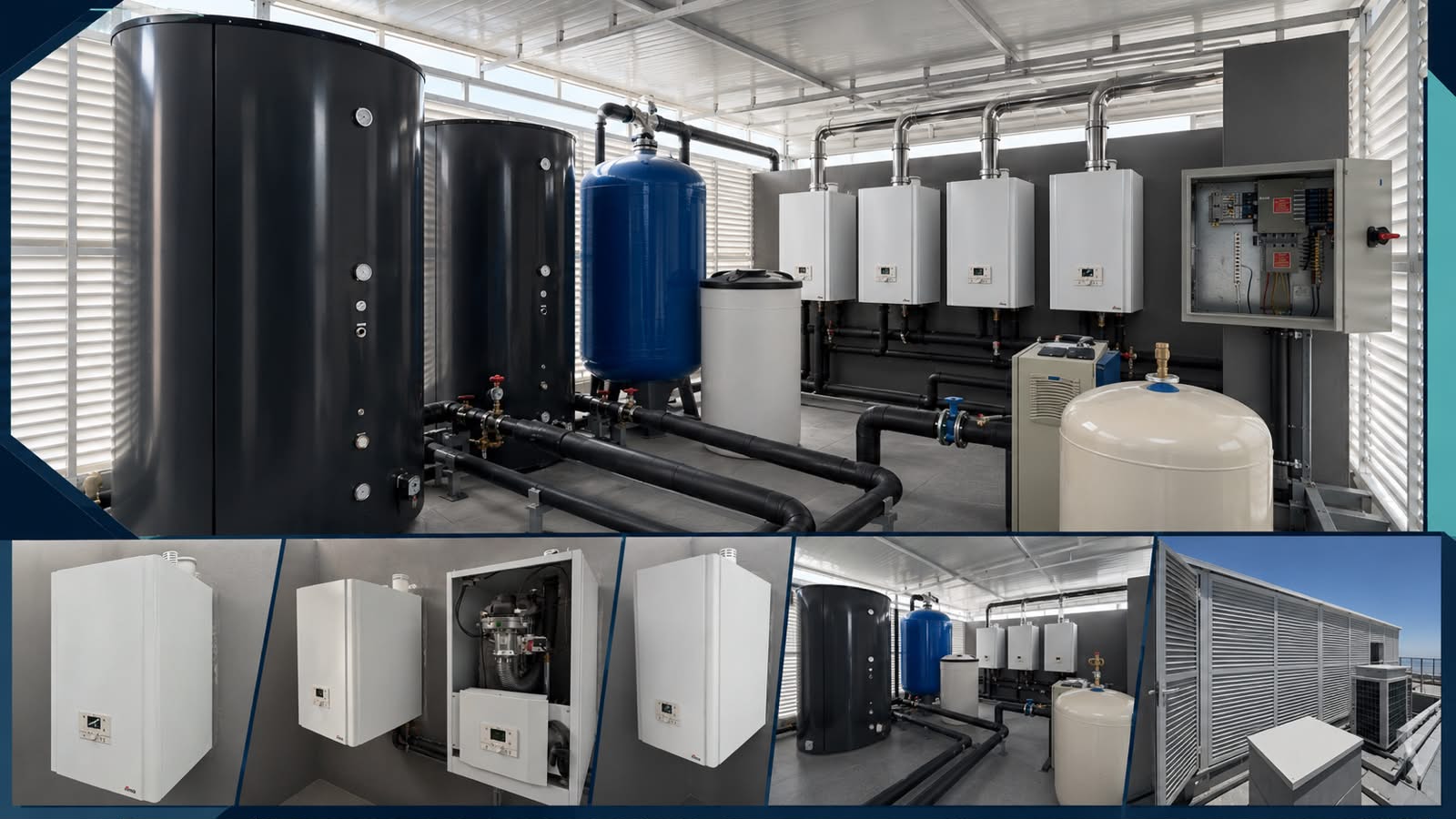
Top 10 Types of Boilers for Commercial & Industrial Applications in UAE
Boilers play an important role in many commercial, residential, hospitality and industrial facilities across the United Arab Emirates. From providing hot water in hotels and residential buildings to generating steam for industrial processes, the right boiler can have a major impact on energy efficiency, reliability and operating costs. Choosing the right commercial and industrial boiler requires considering the building’s heating requirements, capacity, fuel availability and intended application. But with different boiler designs, fuel options and applications available, choosing the right system can be challenging. So, what are the top types of boilers available for commercial and industrial applications in the UAE? In this guide, we look at 10 important boiler types, how they work, where they are commonly used and what to consider when selecting a boiler in Dubai or elsewhere in the UAE. Note: There is no single “best boiler” for every building. The right choice depends on heating requirements, required capacity, fuel availability, operating conditions, space, efficiency targets and the intended application. What Is a Boiler? A boiler is a heating system designed to transfer heat to water or another fluid. Depending on the design, a boiler can produce hot water or steam for heating, domestic hot-water systems or industrial processes. Commercial and industrial boiler systems can use different fuels and technologies, including natural gas, oil and electricity. They can also be classified according to how heat is transferred, such as fire-tube and water-tube boilers. In UAE, boilers are commonly used in: The appropriate boiler depends on the building’s heating and hot-water requirements. Top 10 Types of Boilers 1. Gas-Fired Boilers Gas-fired boilers use natural gas or another suitable gaseous fuel to generate heat. They are commonly considered for commercial and industrial applications where a suitable gas supply is available.If you are evaluating a gas boiler in Dubai, it is important to consider fuel availability, required capacity, efficiency, installation conditions and long-term operating requirements before selecting a system. Advantages of gas-fired boilers Common applications Gas boilers can be used in: 2. Oil-Fired Boilers Oil-fired boilers use heating oil or another approved liquid fuel as their energy source. They can be useful where gas availability is limited or where a project has specific fuel requirements. However, fuel storage, handling, emissions, maintenance and operating costs should be considered when evaluating an oil-fired boiler. Advantages 3. Electric Boilers Electric boilers use electrical heating elements to heat water. Because they do not require on-site combustion, electric boilers can be suitable for applications where electrical power is readily available and there are specific requirements around fuel combustion. Benefits of electric boilers The suitability of an electric boiler depends on the building’s electrical infrastructure, required heating capacity, operating profile and energy costs. For a commercial project in Dubai, these factors should be evaluated before choosing an electric boiler in UAE. 4. Steam Boilers Steam boilers heat water to produce steam under controlled operating conditions. Steam can then be distributed through a piping system for heating or industrial processes. According to the U.S. EPA, steam systems are widely used for industrial processes, cooking, heating and other operations, with water-tube and fire-tube systems among the common designs. Common applications of steam boilers Steam boiler selection requires careful consideration of required steam pressure, steam output, fuel type, operating conditions and safety requirements. 5. Hot Water Boilers Hot water boilers heat water without converting it into steam. They are commonly used for building heating and hot-water applications. The EPA describes hot water boilers as commercial or industrial-scale water heaters used for applications such as bathing, laundry and dishwashing. Common applications Hot water boilers are suitable for: For buildings requiring a reliable supply of heated water, a properly sized commercial hot water boiler can form an important part of the overall heating system. 6. Fire-Tube Boilers Fire-tube boilers are designed so that hot combustion gases pass through tubes surrounded by water. This design is commonly used in packaged commercial and industrial boiler systems. How does a fire-tube boiler work? The basic process is: Fuel combustion → Hot gases → Tubes → Heat transferred to water → Hot water or steam Fire-tube boilers can be suitable for applications with moderate steam or heating requirements. Applications Fire-tube boilers are particularly important to consider when evaluating commercial boilers in Dubai because they are commonly used for packaged heating applications. 7. Water-Tube Boilers Water-tube boilers work differently from fire-tube boilers. In a water-tube boiler, water flows through tubes while hot combustion gases pass around the tubes and transfer heat to the water. Water-tube boilers are widely associated with larger steam outputs and higher-pressure applications. Bosch’s technical guidance, for example, notes their use for very large steam outputs and higher pressures. Advantages Common applications 8. Condensing Boilers Condensing boilers are designed to recover additional heat from water vapour in combustion gases. This allows the boiler to extract more useful heat from the combustion process. The U.S. Department of Energy notes that condensing hot-water boilers can recover heat from water vapour in combustion gases and are typically more efficient than non-condensing boilers, although they require suitable corrosion-resistant materials and have other design considerations. Why consider a condensing boiler? Potential advantages include: However, condensing technology is not automatically the best choice for every project. System design, return-water temperature, load profile, installation conditions and lifecycle cost should all be considered. 9. Combination Boilers Combination boilers, commonly called combi boilers, combine heating and hot-water functions within one system. They can be useful where both space heating and hot-water generation are required. Advantages The suitability of a combination boiler depends on the building’s hot-water demand and heating requirements. For larger commercial buildings, a different boiler configuration may be more appropriate depending on the required capacity. 10. High-Efficiency Commercial & Industrial Boilers The final category is not a single heat-transfer design. Instead, it represents modern boiler systems designed to provide efficient operation for demanding commercial and industrial applications. High-efficiency boilers can incorporate technologies such as: The U.S. Department of Energy recommends considering lifecycle cost rather than simply the initial
What Is a Water Chiller Used For?
A chiller can mean different things to different people. That’s because chillers quietly support many of the cooling needs in UAE buildings and industrial facilities. Most people only notice them when something goes wrong, like when the air conditioning stops maintaining the right temperature, a production process starts overheating, or a cold room isn’t cooling properly. If you’ve searched for “what is a water chiller used for,” you’re probably trying to figure out whether a chiller is the right solution for your project, or whether you actually need something else, such as an AC condenser, cooling tower, or cold room unit. Here’s a simple explanation of what chillers do and where they are commonly used across UAE hotels, factories, hospitals, and commercial buildings. What Does a Water Chiller Do? At its core, a water chiller removes heat from water, or a water-glycol mixture, and circulates that chilled liquid to wherever cooling is needed; an air handling unit, a production line, a server room, or a cold storage area. The liquid absorbs heat from whatever it’s cooling, returns to the chiller, gets cooled back down, and goes out again. It’s a continuous loop, not a one-time blast of cold air the way a split AC unit works. Chillers broadly fall into two categories: air-cooled units, which reject the absorbed heat straight into the outside air, and water-cooled units, which pass that heat to a secondary loop, usually a cooling tower. We’ve covered how those setups differ, along with the other chiller categories worth knowing about, in Types of Water Chiller Systems. This post focuses less on which type you need and more on why facilities need one in the first place. Where Water Chillers Are Used? Manufacturing and Industrial Process Cooling In a factory, heat is a byproduct of almost everything, like moulding machines, extruders, welding equipment, compressors. Left unmanaged, that heat warps tolerances, shortens machine life, and slows production. Chillers pull that heat away and hold process water at a steady temperature, which is often the difference between a consistent production run and a batch of rejected parts. Chillers used for this purpose frequently work alongside water filtration systems to keep the closed loop clean and prevent scale build-up inside the machine, which matters even more in the UAE given the mineral content of local water supplies. Food and Beverage Production Bottling lines, dairy processing, bakeries, and cold-chain packaging all depend on precise temperature control to keep products safe and consistent. A chiller here isn’t just about comfort cooling, it’s a food-safety control point. Glycol chillers in particular are common in this space, since a water-glycol mix can run at lower temperatures without freezing. Commercial Buildings and Central HVAC This is the application most people picture first. Office towers, malls, and mixed-use developments in the UAE rarely rely on individual split units once they pass a certain size. It’s far more efficient to run one or several central chillers feeding air handling units on every floor. Given how many months of the year Dubai and Abu Dhabi sit above 35°C, a central chiller plant is doing more sustained, heavier-duty work here than in most other climates, which is also why sizing and maintenance schedules matter more locally than they might elsewhere. Hotels and Hospitality Hotels have a slightly different problem: they need reliable cooling and reliable hot water at the same time, often at very different points in the building. Chillers handle the cooling load while separate systems handle domestic hot water, but the two are frequently specified and installed together. Hotel projects we’ve worked on typically pair a water chiller system with calorifiers and boilers so guest comfort doesn’t depend on juggling three unrelated systems. Healthcare Facilities Hospitals and clinics run equipment like MRI machines, lab refrigeration, and sterilisation units that cannot tolerate temperature swings. A chiller failure in a hospital isn’t an inconvenience; it’s a clinical risk. That’s why healthcare projects tend to specify redundancy (a backup chiller or module) rather than relying on a single unit with no fallback. Data Centres and Server Rooms Servers generate constant heat regardless of the time of day or season, so the cooling demand never really drops the way it might in an office. Chillers here are typically sized with less tolerance for downtime than almost any other application, since even a short cooling interruption can mean equipment throttling or failure. Villas and Smaller Domestic Projects Not every chiller application is industrial. Larger private villas sometimes use a packaged water chiller to cool domestic water or feed a villa-wide air conditioning setup, particularly where a single system covering the whole property is more practical than multiple split units. These units are typically smaller and fully automatic, cooling to a set temperature and switching off once that point is reached. Signs Your Facility Might Need a Water Chiller A few patterns tend to show up before a facility manager starts looking into water chillers seriously: If any of that sounds familiar, it’s usually worth a proper load assessment before committing to a specific unit. Our team handles that kind of site evaluation as part of our engineering, installation and technical services, covering everything from sizing through installation and commissioning. Choosing the Right Chiller for the Application Once the application is clear, the next decision is which type of chiller actually fits it; air-cooled versus water-cooled, standard water versus glycol, and what tonnage or capacity the load calls for. We’ve covered selection factors, from tonnage and energy evaluation to spare parts availability, in How To Choosing The Right Chiller. As a general rule, air-cooled units tend to suit smaller or space-constrained sites since they skip the cooling tower, while water-cooled systems tend to win out on larger, continuous-load applications where the extra efficiency offsets the added infrastructure. Conclusion Whether you’re cooling a production line, a hotel, or a hospital wing, the application should drive the specification, not the other way round. If you’re weighing up options for a UAE project, get in