Boilers are an important part of many commercial, residential, hospitality, healthcare and industrial facilities in Dubai. Over time, even a well-maintained boiler can become less efficient, require more frequent repairs or struggle to meet the heating demands of a building.
When this happens, a complete boiler replacement is not always the only option. Depending on the condition of the system, boiler upgradation, modernization or retrofit may improve performance, efficiency and reliability while extending the useful life of the existing system.
But how do you know when a boiler needs an upgrade? What are the benefits of upgrading an existing boiler? And when is replacement a better option?
This guide explains everything you need to know about boiler upgradation in Dubai, including the signs that your boiler may need an upgrade, the benefits, the upgrade process and the difference between upgrading and replacing a boiler.
What Is Boiler Upgradation?
Boiler upgradation involves improving an existing boiler system by replacing, modifying or modernizing components to improve its performance, efficiency, reliability and safety.
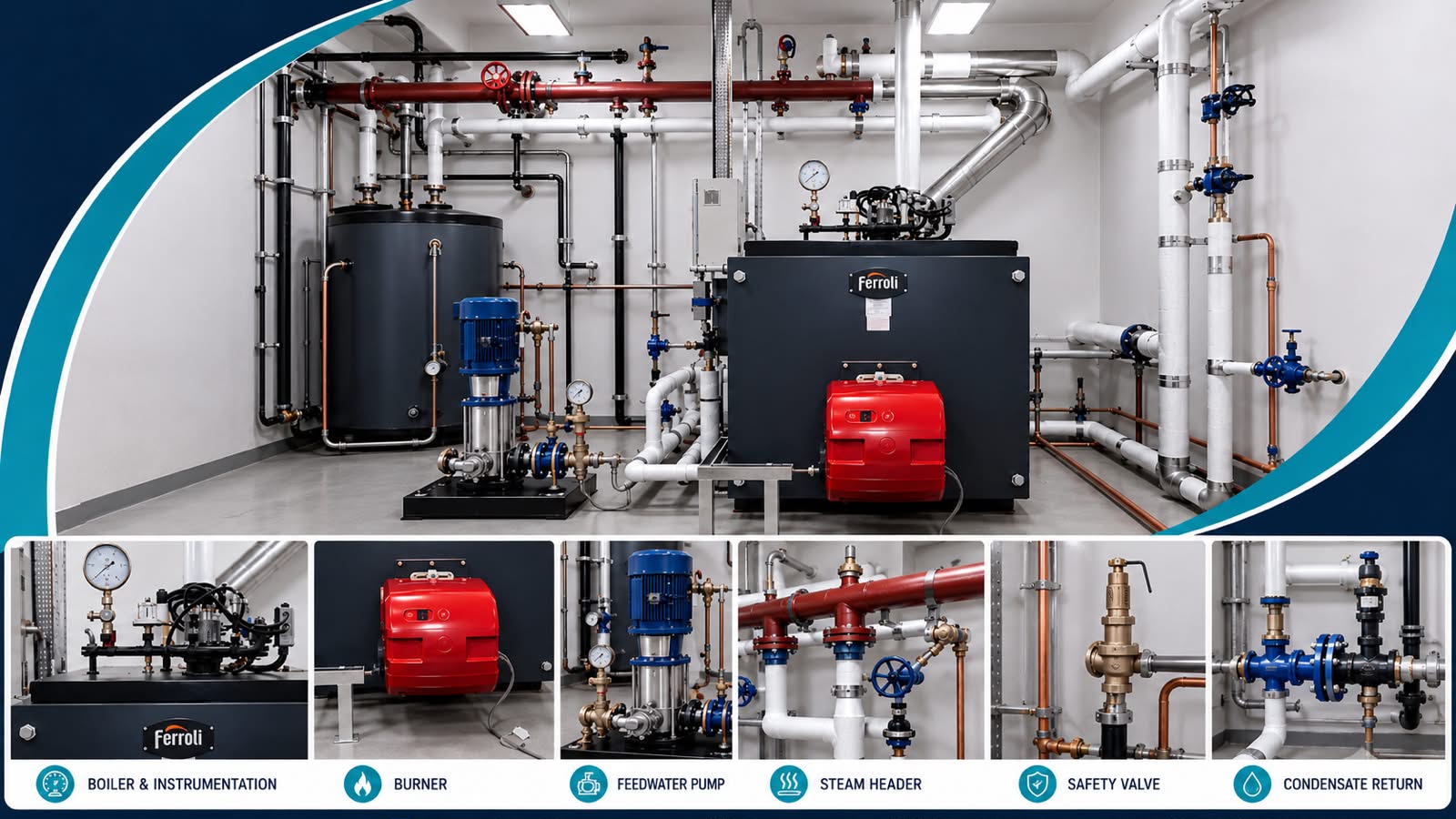
Depending on the condition and design of the existing system, an upgrade may involve improvements to:
- Boiler components
- Burners
- Control systems
- Temperature controls
- Pumps
- Valves
- Safety systems
- Insulation
- Monitoring systems
- Water circulation systems
The objective is not to replace individual parts. A proper boiler upgrade begins with an assessment of the existing system to determine what is working efficiently, what needs improvement and whether upgrading is technically and economically suitable. For some buildings, upgrading selected components can extend the service life of an existing boiler. For others, replacing the entire boiler may be the more practical solution.
Why Do Older Boilers Need Upgradation?
Boilers operate for long periods and are exposed to continuous heating, pressure and mechanical operation. As equipment ages, its efficiency and reliability can gradually decline.
Some common reasons for considering a boiler upgrade include:
1. Declining Efficiency
Older boiler systems may consume more energy to produce the same heating output. Upgrading certain components or controls can help improve system efficiency.
2. Frequent Breakdowns
Repeated breakdowns can indicate that important components are reaching the end of their useful life.
3. Increasing Maintenance Costs
If a boiler requires frequent repairs and replacement parts, continuing with the existing system may become increasingly expensive.
4. Outdated Components
Older boilers may use outdated controls, burners or other components that are less efficient than modern alternatives.
5. Difficulty Finding Spare Parts
For older equipment, replacement parts may become difficult or expensive to source.
6. Poor Heating Performance
Uneven heating, inconsistent hot-water production or difficulty maintaining the required temperature can indicate that the boiler system needs assessment.
7. Changing Building Requirements
A building’s heating requirements can change over time. Expansion, increased occupancy or changes in operations may mean that the existing boiler system no longer provides the required capacity.
7 Signs Your Boiler May Need an Upgrade
Not every old boiler needs to be replaced immediately. However, the following signs may indicate that it is time to evaluate the system.
1. Frequent Boiler Breakdowns
If your boiler is experiencing repeated failures, the underlying cause should be investigated rather than simply repairing the same problem repeatedly.
2. Rising Energy Consumption
An increase in energy consumption without a corresponding increase in heating demand may indicate declining boiler efficiency.
3. Increasing Repair Costs
When repair and maintenance costs continue to increase, upgrading or replacing certain components may be more economical in the long term.
4. Inconsistent Heating
Difficulty maintaining consistent temperatures or hot-water output may indicate problems with the boiler, controls or circulation system.
5. Outdated Control Systems
Modern control and monitoring technologies can provide better control over boiler operation and help improve system performance.
6. Difficulty Sourcing Spare Parts
If important components are obsolete or difficult to obtain, upgrading the system may be worth considering.
7. The Boiler Is Approaching the End of Its Service Life
Age alone does not determine whether a boiler needs replacement. However, the age of the system should be considered together with its efficiency, condition, maintenance history and operating costs.
What Are the Benefits of Boiler Upgradation?
A properly planned boiler upgrade can provide several operational benefits.
Improved Energy Efficiency
Upgrading inefficient components and controls can help the system operate more effectively and potentially reduce unnecessary energy consumption.
Better System Reliability
Replacing worn or outdated components can reduce the risk of unexpected failures and improve overall reliability.
Reduced Maintenance Requirements
Modernized equipment may require less frequent intervention compared with an ageing system with recurring component failures.
Improved Temperature Control
Modern control systems can provide more accurate monitoring and regulation of boiler operation.
Extended Equipment Life
In suitable cases, upgrading an existing boiler can help extend its useful operating life.
Improved Safety
Upgrading safety controls and related components can help ensure that the system continues to operate according to applicable requirements.
Better Overall Performance
A properly assessed and upgraded system can provide more consistent heating performance and better operational control.
Boiler Upgrade vs Boiler Replacement:
One of the most common questions building owners face is whether they should upgrade their existing boiler or replace it completely.
The answer depends on the condition, age, efficiency and design of the existing system.
| Boiler Upgrade | Boiler Replacement |
|---|---|
| Improves an existing system | Replaces the existing boiler |
| Suitable when the main equipment remains usable | Suitable when the boiler is severely outdated or damaged |
| May involve selected component replacement | Requires installation of a new boiler |
| Can potentially extend system life | Provides a new system with modern technology |
| May reduce the scope of work | May require more extensive installation |
| Suitable for certain retrofit situations | Suitable when upgrading is no longer practical |
A professional assessment can help determine which option makes more technical and financial sense for the facility.
How Does the Boiler Upgradation Process Work?
A boiler upgrade should not begin with replacing components without first understanding the existing system.
A typical process includes the following stages:
Step 1: Existing Boiler Assessment
The existing boiler and associated equipment are inspected to understand their current condition and performance.
Step 2: System Inspection
Important components such as controls, burners, pumps, valves and safety systems can be assessed depending on the system design.
Step 3: Performance Evaluation
The system’s heating requirements, operating performance and efficiency are considered to identify potential areas for improvement.
Step 4: Upgrade or Replacement Recommendation
Based on the assessment, the appropriate solution can be determined. This may involve upgrading selected components, retrofitting the system or replacing the boiler.
Step 5: Installation and Upgradation
The required equipment and components are installed according to the approved solution.
Step 6: Testing
The upgraded system is tested to verify that the equipment and associated components are operating correctly.
Step 7: Commissioning
The system is commissioned to ensure that it performs according to the required operating conditions.
Step 8: Ongoing Maintenance
Regular inspection and maintenance can help maintain system performance and identify potential issues before they develop into major failures.
How Much Does Boiler Upgradation Cost in Dubai?
There is no single fixed price for boiler upgradation in Dubai because every system is different.
The overall cost can depend on factors such as:
- Boiler type and capacity
- Age and condition of the existing system
- Components that need to be upgraded
- Control system requirements
- Burner requirements
- Pump and valve requirements
- Installation requirements
- Testing and commissioning
- Availability of replacement parts
- Building access and site conditions
For this reason, it is better to assess the existing boiler before deciding whether an upgrade or complete replacement is the most suitable solution.
How to Choose the Right Boiler Upgrade Solution
Before upgrading an existing boiler, building owners and facility managers should consider several factors.
Assess the Existing System
Understand the condition and performance of the existing boiler before deciding what needs to be changed.
Consider Current Heating Requirements
The upgraded system should be capable of meeting the building’s current and expected heating requirements.
Evaluate Operating Costs
Energy consumption, maintenance costs and recurring repairs should all be considered when comparing upgrade and replacement options.
Consider Spare Parts Availability
If important components are obsolete or difficult to source, replacement or modernization may be more practical.
Look at Long-Term Performance
The cheapest immediate solution may not always be the most economical over the long term. Consider expected maintenance, efficiency and operating costs.
Boiler Upgradation for Commercial and Industrial Buildings
Boiler upgrades can be relevant to a wide range of facilities, including:
- Hotels
- Hospitals
- Residential buildings
- Commercial buildings
- Industrial facilities
- Manufacturing facilities
- Institutional buildings
Each facility has different heating requirements. A hotel, for example, may have different hot-water requirements from an industrial facility.
This is why boiler upgrades should be based on the building’s actual operating requirements rather than using a one-size-fits-all solution.
Boiler Efficiency and Water Treatment
Boiler performance is also affected by water quality.
Scale, corrosion and deposits within a boiler system can affect heat transfer and system performance. Proper water treatment and regular monitoring can therefore play an important role in protecting boiler equipment.
For facilities using boiler systems, water treatment should be considered as part of an overall equipment maintenance strategy rather than as a separate concern.
When Should You Upgrade or Replace Your Boiler?
There is no single age at which every boiler should be replaced.
Instead, consider:
- How often does the boiler break down?
- Are maintenance costs increasing?
- Is energy consumption rising?
- Are spare parts still available?
- Is the boiler meeting the building’s heating requirements?
- Are the existing controls outdated?
- Is the system operating safely?
- Would upgrading individual components significantly improve performance?
- Would a new boiler provide better long-term value?
A professional inspection can help answer these questions before a major investment is made.
Why Consider Cauldron for Boiler Upgradation in Dubai?
Cauldron provides heating, cooling and water treatment solutions for commercial, residential and industrial applications in the UAE.
The company works with boiler systems as part of its wider engineering solutions, including equipment supply, installation, retrofit, testing and commissioning.
For an ageing boiler system, the first step should be understanding the condition of the existing equipment and identifying the most appropriate solution. Depending on the assessment, this may involve upgrading selected components, modernizing the system or replacing the boiler.
Cauldron’s engineering approach focuses on finding a solution that matches the facility’s operational requirements rather than applying the same solution to every project.
Conclusion
An ageing boiler does not automatically mean that complete replacement is necessary. In many situations, boiler upgradation or modernization may be worth considering to improve efficiency, reliability and system performance. The right decision depends on the condition of the existing boiler, operating costs, heating requirements, maintenance history and long-term facility needs.
If you are evaluating an existing boiler system in Dubai, a professional assessment can help determine whether upgrading, retrofitting or replacing the boiler is the most suitable option.
Looking to assess an existing boiler system in Dubai? Contact Cauldron to discuss your boiler upgrade or replacement requirements.
Frequently Asked Questions About Boiler Upgradation
What is boiler upgradation?
Boiler upgradation involves improving an existing boiler system by modernizing or replacing selected components to improve performance, efficiency, reliability and safety.
How do I know if my boiler needs an upgrade?
Frequent breakdowns, increasing maintenance costs, rising energy consumption, poor heating performance and outdated components can indicate that a boiler should be assessed for an upgrade or replacement.
Is it better to upgrade or replace an old boiler?
It depends on the boiler’s condition, age, efficiency, maintenance history and the availability of replacement components. In some cases, upgrading is practical, while a complete replacement may be more suitable for severely outdated systems.
Can an old commercial boiler be upgraded?
Some older commercial boilers can be upgraded or retrofitted depending on their design, condition and available components. A professional assessment is recommended before deciding.
How much does boiler upgradation cost in Dubai?
The cost varies depending on boiler capacity, equipment condition, components required, installation work, controls, testing and commissioning. A site assessment is usually required to provide a more accurate estimate.
How long does a boiler upgrade take?
The timeframe depends on the scope of work, boiler type, availability of components, site conditions and whether the project involves a partial upgrade or complete replacement.
Can boiler upgrading improve energy efficiency?
Upgrading inefficient components, controls and other parts of a boiler system can potentially improve operating efficiency. The actual improvement depends on the condition and design of the existing system.
How often should a commercial boiler be inspected?
Commercial boilers should be inspected and maintained according to the manufacturer’s recommendations, applicable requirements and the operating conditions of the facility. Regular maintenance can help identify issues before they become major failures.