Most people don’t think about where their hot water comes from until there’s a problem. The shower suddenly turns cold, the hotel runs out of hot water during peak hours, or a new building project reaches the stage where every piece of mechanical equipment needs to be specified. That’s when the term “calorifier” starts appearing in conversations.
For many, it’s an unfamiliar word. Some engineers refer to it as a hot water storage tank, others call it a hot water cylinder, while maintenance teams often say “the hot water tank.” Different names, but they all refer to the same essential piece of equipment that keeps hot water available throughout a building.
Whether you’re planning a residential tower, managing a commercial facility, upgrading an industrial plant, or simply trying to understand why your building’s hot water system isn’t performing as expected, knowing how a calorifier works is important.
In this guide, we’ll explain what a calorifier is, how it fits into a building’s hot water system, the different types available, where they’re commonly used, and what to consider when choosing reliable calorifier suppliers in the UAE.
What Is a Calorifier?
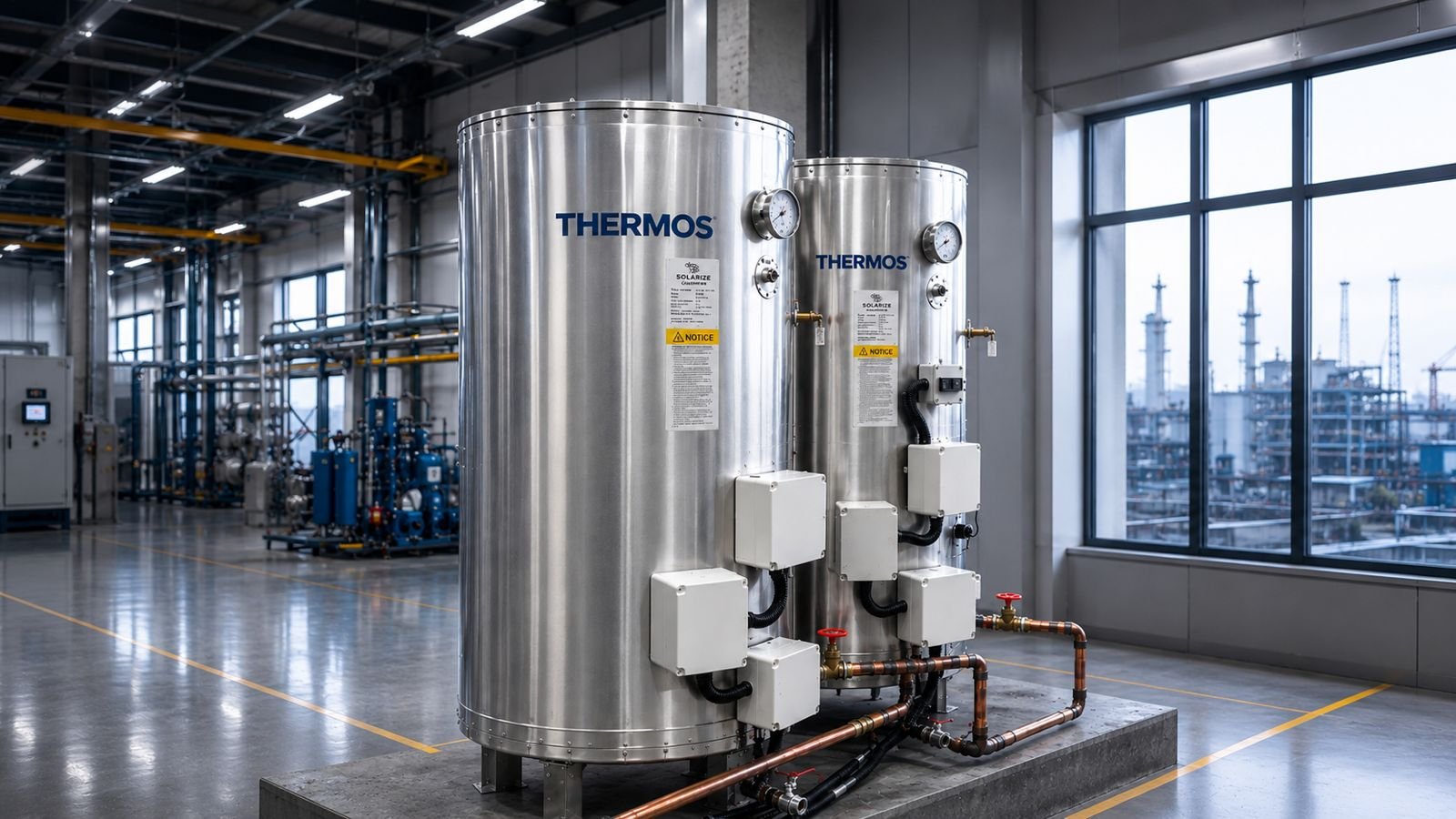
A calorifier is an insulated storage vessel that heats and holds water using an external heat source, rather than generating heat itself. That heat source is typically a boiler, heat pump, solar system, or electric element, and the calorifier’s job is simply to store the hot water it produces and hold it at temperature until it’s needed. In practice, that makes a calorifier the “buffer” between a heat source that produces hot water steadily and a building that demands it unevenly. A hotel doesn’t need hot water at a constant rate all day; it needs a lot of it, fast, at 7 a.m. and 7 p.m.
In a commercial context, “calorifier” usually refers to a purpose-built storage tank serving a hotel, hospital, residential tower, or industrial facility, rather than the small storage heater under a kitchen sink. That distinction is important in the UAE, where most calorifiers installed are commercial-grade, engineered for continuous cycling and far higher storage capacities than a typical domestic cylinder.
What Is a Calorifier Used For?
Calorifiers exist to solve a timing problem: the gap between when hot water is generated and when it’s actually demanded. Across UAE buildings, that shows up in a few recurring ways.
- Guest and domestic hot water — hotels and residential towers rely on calorifiers to store enough hot water to cover simultaneous demand across hundreds of rooms, without needing a boiler large enough to meet peak load instantaneously.
- Healthcare hot water supply — hospitals need a continuous, reliable hot water reserve for patient care, sanitation, and sterilisation processes that can’t tolerate a dip in supply.
- Process and industrial use — laundries, food processing, and manufacturing facilities use calorifiers to hold hot water generated by a central boiler or steam plant for use across multiple processes.
- Renewable and hybrid integration — calorifiers are often the point where solar water heaters or heat pumps meet a backup boiler, storing whatever heat is available and topping up from the secondary source only when needed.
If you’re trying to work out whether your building needs a calorifier, the real question isn’t “do we need hot water storage,” it’s “how much simultaneous demand do we actually hit, and how long can we afford for the system to recover between peaks.”
Types of Calorifiers
Commercial calorifiers are generally grouped by how they receive heat, and by the material they’re built from.
| Type | How it works | Best suited for |
|---|---|---|
| Storage (indirect) calorifier | Contains an internal heating coil, removable coil, or heat exchanger; heats and stores water in one vessel | Hotels, hospitals, schools: sites needing a self-contained, low-maintenance storage and heating unit |
| Buffer calorifier | Has no internal heating source; water is heated externally and stored | Sites with a dedicated external heat exchanger or existing steam/boiler plant already producing hot water |
| SS316L stainless steel tanks | Constructed from marine-grade stainless steel rather than mild steel or glass-lined carbon steel | Projects prioritising corrosion resistance, longer service life, and lower long-term maintenance |
Storage calorifiers tend to be the default choice for hospitality and healthcare projects because recovery times (usually one to four hours) suit predictable demand patterns, and because they don’t carry the electrical infrastructure overhead of larger transformer-fed systems. Buffer calorifiers make more sense where a facility already has a steam plant or external heat exchanger doing the heavy lifting.
What’s the Difference Between a Calorifier and a Boiler?
A boiler generates heat; it burns fuel or uses electricity to raise water temperature. A calorifier stores heat; it holds water that’s already been heated, ready for use. In most commercial systems, the two work together: the boiler produces hot water or steam, and the calorifier stores it in the volume needed to cover peak demand. Neither one replaces the other; a boiler without adequate storage struggles with simultaneous demand, and a calorifier without a heat source is just an insulated empty tank.
Why Is Calorifier Demand in the UAE High?
A few regional factors shape how calorifiers get specified here. Hospitality demand is the biggest driver. Dubai and Abu Dhabi’s hotel sector needs enough stored hot water capacity to handle simultaneous guest demand across hundreds of rooms without a drop in temperature or pressure, which pushes many projects toward larger storage volumes than you’d size for a similar building in a milder climate. Corrosion resistance also matters more here than in many markets, given water hardness and quality variability across the region, which is a large part of why SS316L stainless steel tanks have become the preferred choice over older mild steel or glass-lined designs. And because a meaningful share of UAE building stock is now over a decade old, there’s a steady, ongoing market for calorifier replacement and retrofit rather than only new installations.
How to Choose a Calorifier Suppliers in UAE?
Not every supplier bringing calorifiers into the UAE is set up to support them once they’re installed. A few things worth checking before committing to a supplier:
- Material and build quality — confirm the tank is genuinely SS316L or an equivalent corrosion-resistant grade, not a lower-spec substitute marketed under the same name.
- Compatibility with your heat source — check the calorifier is designed to integrate with your specific boiler, heat pump, or solar system, not a generic tank requiring costly site modification.
- Local manufacturing or fast lead times — calorifiers manufactured locally in the UAE typically mean shorter delivery times and easier custom sizing than fully imported units.
- After-sales support — a calorifier is a long-service-life asset; ask how the supplier handles retrofit, replacement, and technical support years after installation, not just at point of sale.
- Track record with your building type — a supplier experienced with hotel and hospital-scale hot water storage will size and spec differently than one used to small commercial installations.
Cauldron manufactures Solarize SS316L calorifier tanks locally in the UAE, alongside THERMOS calorifiers designed for commercial and industrial applications, engineered for hotels, hospitals, residential towers, and industrial facilities across the UAE and Middle East.
When to Consider Calorifier Replacement or Retrofit?
Calorifiers rarely fail without warning. Inconsistent hot water temperature, slower recovery than the tank used to manage, visible corrosion or leaks around fittings, and rising energy costs without a change in usage are all reasonably common signs that a system is due for replacement rather than another repair. Retrofitting an ageing mild-steel tank to a modern SS316L calorifier, in particular, can meaningfully extend service life and reduce the corrosion-related maintenance that older tanks are prone to.
If any of that sounds familiar, it’s worth getting the system assessed before a leak forces the decision. Cauldron’s team provides assessment, equipment selection, and calorifier replacement and retrofit services across Dubai and the wider UAE, covering everything from sizing through to installation and commissioning.
Conclusion
A calorifier stores heat that’s already been generated so a building can meet hot water demand it couldn’t otherwise sustain in real time. Once you understand which type suits your application and what a credible supplier should offer around it- material quality, heat-source compatibility, local support- the sourcing decision gets a lot easier.
For UAE projects that need calorifiers specified, supplied, or upgraded, Cauldron’s team can help you work through the details. Calorifiers are also commonly paired with commercial boiler systems and water treatment solutions to build a complete hot water system.
Frequently Asked Questions
Who are reliable calorifier suppliers in UAE?
UAE’s calorifier market includes both imported storage tanks and locally manufactured options. Cauldron manufactures Solarize SS316L calorifier tanks locally in the UAE, alongside THERMOS calorifiers, with installation, retrofit, and after-sales support included across Dubai, Abu Dhabi, and the wider region.
What is the difference between a calorifier and a hot water storage tank?
A calorifier is a type of hot water storage tank specifically designed to heat and store water using an external heat source such as a boiler, heat pump, or solar system. All calorifiers are storage tanks, but not every storage tank is built to calorifier specifications for commercial cycling and integration.
Why is SS316L stainless steel used in calorifiers?
SS316L offers strong resistance to water-related corrosion, which extends equipment lifespan, reduces maintenance requirements, and holds up well in the UAE’s water conditions compared to mild steel or glass-lined alternatives.
Do calorifier suppliers in UAE also handle replacement and retrofit?
Reputable suppliers do. Ageing calorifiers are more commonly replaced or retrofitted than repaired past a certain point, so a supplier who can assess existing installations and manage the full retrofit process is generally the better long-term choice.
Which industries use calorifiers most?
Hotels, hospitals, residential towers, commercial buildings, educational institutions, and industrial facilities are the primary users, wherever a continuous and reliable supply of stored hot water is required.