When you ask five different suppliers what chiller you need, you’ll probably get five different answers. That’s because a water chiller system isn’t a single product; it’s an entire category, and picking the wrong type for your application is one of the more expensive mistakes a facility manager can make in the UAE’s climate. This guide explains every major type of chiller system, so you know exactly what you’re comparing before you request a quote.
What Is a Water Chiller Used For?
A water chiller system removes heat from water or a water-glycol mix and circulates the cooled fluid to wherever temperature control is needed. In practice, that covers a wide range of jobs: cooling industrial machinery, holding process water at a stable temperature, supporting HVAC systems in large buildings, or protecting temperature-sensitive stock in food, beverage, and pharmaceutical facilities. If a process or piece of equipment generates heat and needs to stay within a set range, a chiller is usually in that picture.
The Two Main Categories: Air-Cooled vs. Water-Cooled
Every chiller type falls into one of two families, based on how it gets rid of the heat it removes.
Air Cooled Chiller
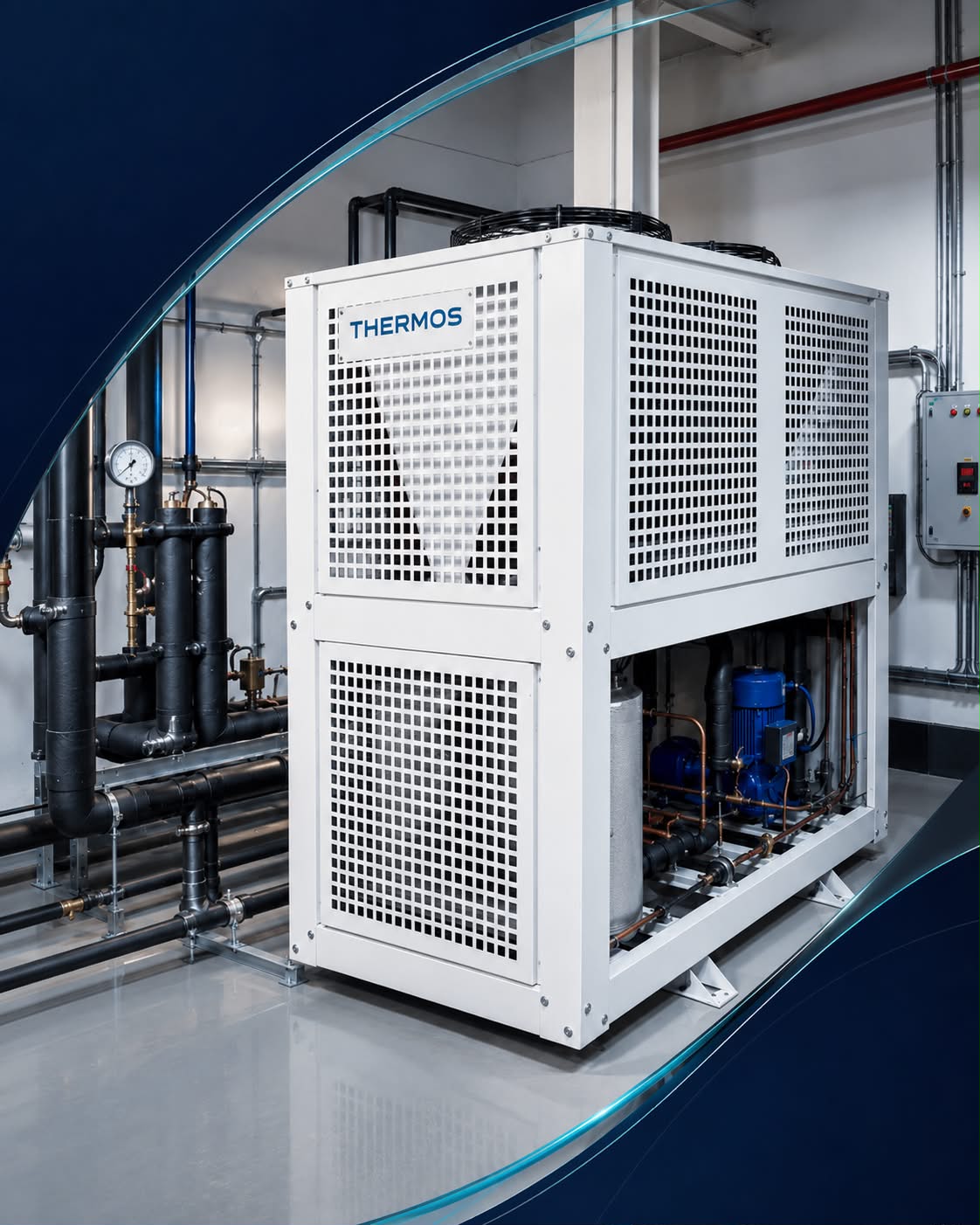
An air-cooled chiller uses ambient air to reject heat straight from the condenser, with fans doing the work instead of a cooling tower. That makes it compact, simpler to install, and easier to maintain, which is why it’s the default choice for smaller commercial sites and facilities where roof or yard space is available but a dedicated plant room isn’t. On Dubai’s hottest afternoons, when ambient temperatures climb well past 45°C, an air-cooled unit has to work harder than a water-cooled one to deliver the same output.
Water Cooling Chiller
A water-cooling chiller rejects heat into a cooling tower loop rather than the surrounding air, which makes it noticeably more efficient in hot, high-load environments. It costs more upfront and needs a dedicated plant room plus ongoing water treatment, but for large commercial buildings and heavy industrial sites across the UAE, that efficiency gain usually pays for itself over the system’s lifetime.
Chiller Types By Application
Chillers get grouped again by what they’re actually cooling. This is where most buyers start narrowing things down.
Industrial Water Chiller / Industrial Cooling System
An industrial water chiller is built for heavier, continuous-duty loads: manufacturing lines, plastics and injection moulding, printing presses, metal finishing, and similar processes that generate steady heat through a full shift. These units are sized around cooling tons rather than floor space, and reliability tends to matter more than almost anything else, since downtime on a production line is expensive. Anyone researching an industrial cooling system for a factory or warehouse in the UAE is usually looking at this category.
Process Cooling Chiller
A process cooling chiller does a more specific job: holding a process fluid at a tight, stable temperature rather than just cooling a general space or machine. You’ll find these in laboratories, chemical processing, plastics extrusion, and food and beverage production, anywhere a few degrees of temperature drift can affect product quality or a reaction outcome.
Machine Cooling Chiller
A machine cooling chiller is sized and configured around a single piece of equipment, or a small cluster of machines, such as CNC equipment, lasers, welding systems, or injection moulding presses, rather than an entire building or process line. These tend to be smaller, often portable units positioned right next to the machine they’re protecting.
Glycol Chiller
A glycol chiller circulates a water-glycol mixture instead of plain water, which lowers the fluid’s freezing point and lets the system run at sub-zero or near-freezing temperatures without ice forming inside the pipework. This makes it the standard choice for breweries, cold storage support, food processing, and any application that needs chilled fluid below 5°C. Whether it’s a glycol chiller in Abu Dhabi or a brewery setup in Dubai, this is the category to look at whenever a process needs genuinely deep cooling rather than standard air-conditioning-range temperatures.
Commercial Chiller
A commercial chiller supports the comfort-cooling side of a building, such as hotels, malls, offices, and hospitals, rather than an industrial process. These systems are usually specified alongside the building’s HVAC design, sized to the structure’s cooling load, and chosen with an eye on energy efficiency, since they tend to run for long hours across most of the year in the UAE’s climate.
Domestic Water Tank Chiller
A domestic water tank chiller is the smallest category on this list, used to cool stored water for residential or light commercial use rather than industrial processes. Villas, staff accommodation blocks, and boutique hospitality properties sometimes use these to keep rooftop tank water at a stable, comfortable temperature instead of letting it heat up under direct sun.
What is”Type 3″ Chillers?
Type 3 chiller is a refrigerant-handling classification. Under EPA Section 608 in the US, Type 3 designates low-pressure equipment, mainly large centrifugal chillers whose evaporator operates under vacuum. It’s a certification requirement for the technicians servicing that equipment, not a term UAE buyers need to compare when sourcing a system, though it’s useful to recognise if it shows up on an imported spec sheet.
So, What’s The Best Water Chiller For Your Application?
There isn’t a single “best” chiller, only the best fit for your load, your space, and your budget. As we cover in our guide on choosing the right water chiller for industrial applications, cooling capacity, climate, installation space, and maintenance access all factor into the decision before you even get to comparing brands. A good starting point is matching your chiller type to your application first, industrial, process, machine, glycol, commercial, or domestic, then narrowing down between air-cooled and water-cooled based on your site and budget.
Sourcing A Water Chiller Supplier In The UAE
Whether you need a glycol chiller in Abu Dhabi, an industrial chiller in Sharjah, or a full commercial chiller system in Dubai, sourcing locally matters more than it might seem. UAE-based suppliers understand the region’s ambient temperature extremes, water quality, and the maintenance schedules that keep a system running through peak summer months, details that off-the-shelf international spec sheets don’t always account for. Cauldron supplies and supports the full range of chiller systems across the UAE, and our team can help match a system to your actual load rather than a generic catalogue entry.
If you’re still not sure which type fits your operation, get in touch with our team. We’ll understand your load, your site, and your budget, and recommend a water chiller system built around how you’ll actually use it.
Frequently Asked Questions
What is a water chiller used for?
It removes heat from water or a water-glycol mix to cool machinery, processes, or building spaces, keeping equipment and environments within a set temperature range.
What are the main types of water chillers?
The two core categories are air-cooled and water-cooled. Within those, chillers are grouped further by application: industrial, process, machine, glycol, commercial, and domestic.
What is the best water chiller?
It depends entirely on the application. A high-load factory typically needs an industrial or process chiller, a brewery needs a glycol chiller, and a hotel needs a commercial chiller sized to its HVAC load.
What is the main purpose of a chiller?
To remove and reject heat from a fluid or process, keeping equipment, products, or spaces at a stable, controlled temperature.
What is a Type 3 chiller?
It’s an EPA refrigerant-handling classification for low-pressure equipment like large centrifugal chillers, not a category buyers compare when purchasing a system.
What are the two types of chillers?
Air-cooled and water-cooled are the two primary categories, based on how each system rejects the heat it removes.