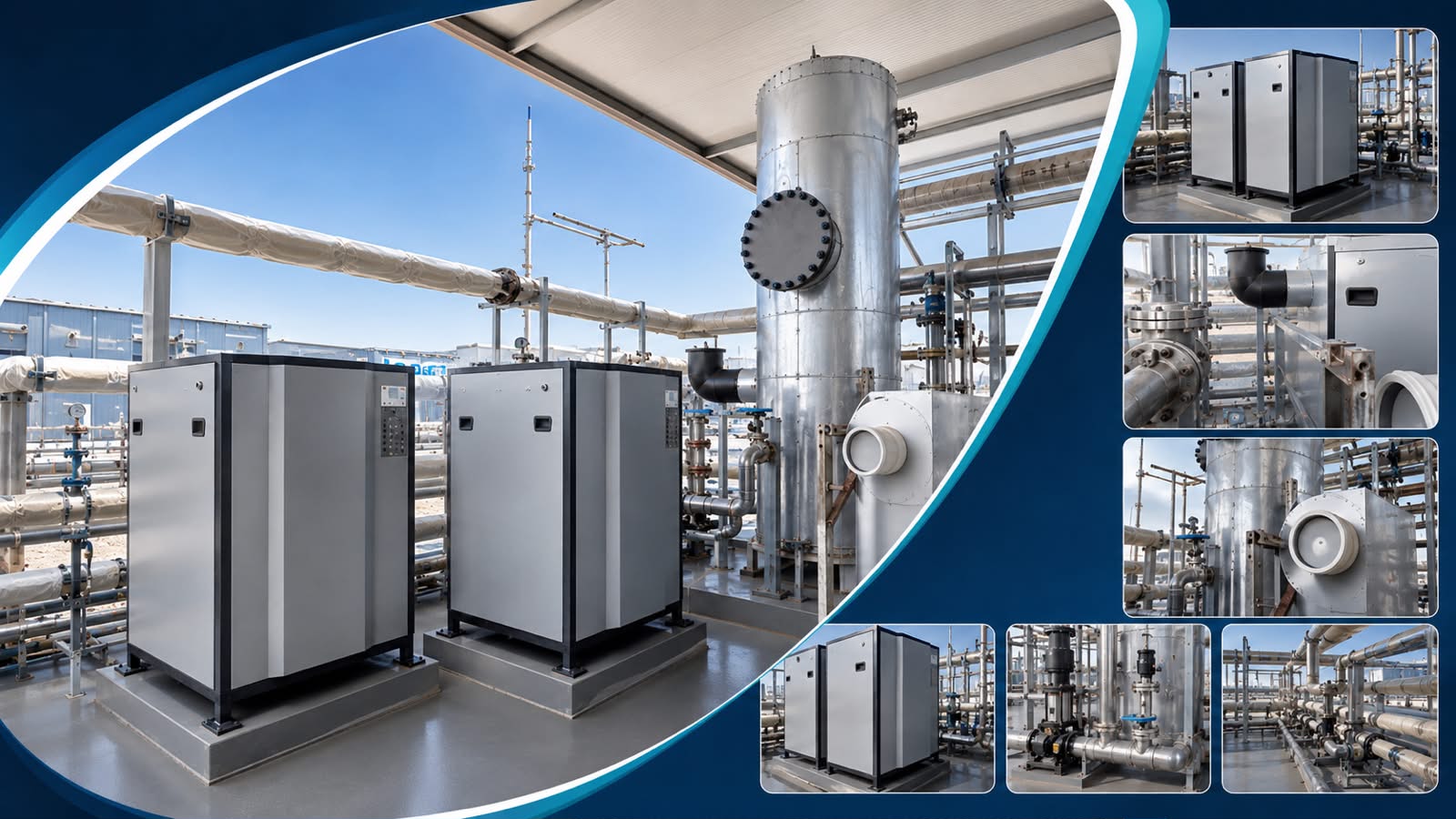
Whether it’s a hotel providing hot showers to hundreds of guests, a hospital maintaining uninterrupted hot water, or a manufacturing facility relying on process heating, a commercial boiler is the heart of the system.
Yet many facility managers and business owners know what a boiler does without fully understanding how it works.
Knowing the basics can make it easier to select the right system, improve efficiency, reduce operating costs, and identify potential maintenance issues before they become expensive repairs.
In this guide, we’ll explain how commercial boiler systems work, the major components involved, different boiler configurations, and which type may be suitable for your application.
What Is a Commercial Boiler?
A commercial boiler is a heating system designed to produce hot water or steam for large buildings and industrial facilities. Unlike residential boilers, commercial systems are built to handle higher heating loads and operate continuously with greater efficiency and reliability.
Commercial boilers are commonly installed in:
- Hotels
- Hospitals
- Schools and universities
- Residential towers
- Shopping malls
- Office buildings
- Manufacturing plants
- Food processing facilities
Depending on the application, the system may provide:
- Domestic hot water
- Central heating
- Process heating
- Steam generation
How Does a Commercial Boiler System Work?
Although boiler designs vary, the operating principle remains largely the same.
Step 1: Fuel Enters the Burner
The process begins when fuel enters the burner. Depending on the installation, the boiler may operate using Natural gas, LPG, Diesel, or Electricity. Many commercial projects across the UAE choose an LPG Boiler because LPG offers reliable combustion, cleaner operation than oil, and is suitable for locations without natural gas infrastructure.
Step 2: Combustion Generates Heat
Inside the combustion chamber, the burner ignites the fuel. The flame generates heat, which is transferred to a heat exchanger. Modern burners are designed to modulate their output based on heating demand, helping reduce unnecessary fuel consumption.
Step 3: Heat Transfers to Water
Cold water flows through the heat exchanger. Instead of allowing combustion gases to escape immediately, the exchanger absorbs their heat and transfers it into the circulating water. The heated water then leaves the boiler and travels through insulated pipework.
Step 4: Hot Water Reaches the Building
The heated water is distributed to different parts of the building, including:
- Heat exchangers
- Calorifiers
- Air handling units
- Fan coil units
- Underfloor heating systems
- Domestic hot water storage tanks
After releasing its heat, cooler water returns to the boiler to be reheated, creating a continuous closed-loop system.
Main Components of a Commercial Boiler System:
A commercial boiler system consists of much more than the boiler itself.
The complete system includes:
| Component | Function |
|---|---|
| Boiler | Generates heat |
| Burner | Burns fuel efficiently |
| Heat Exchanger | Transfers heat to water |
| Circulation Pump | Moves water through the system |
| Expansion Vessel | Compensates for water expansion |
| Control Panel | Regulates temperature and operation |
| Safety Valves | Prevent excessive pressure |
| Flue System | Safely removes combustion gases |
What Is a Condensing Boiler?
A Condensing Boiler is one of the most energy-efficient boiler technologies available today. Unlike conventional boilers, it captures additional heat from the exhaust gases before they leave the flue. Normally, this heat would be lost. Instead, a condensing boiler cools the flue gases enough to recover latent heat, improving overall efficiency and reducing fuel consumption.
For many commercial buildings, condensing technology has become the preferred choice when upgrading ageing boiler systems.
Benefits include:
- Lower operating costs
- Improved fuel efficiency
- Reduced carbon emissions
- Lower flue gas temperatures
- Better long-term energy savings
Wall Hung Boiler vs Floor Standing Boiler
One of the most common questions during boiler selection is whether to install a Wall Hung Boiler or a Floor Standing Boiler.
The best option depends on your building size, heating demand, available plant room space, and future expansion plans.
Wall Hung Boiler
Wall-mounted commercial boilers are compact and ideal where plant room space is limited.
They are commonly installed in:
- Hotels
- Schools
- Apartment buildings
- Small commercial facilities
Advantages include:
- Space-saving design
- Easier installation
- Modular cascade configurations
- High efficiency
Floor Standing Boiler
A Floor Standing Boiler is generally selected when higher heating capacities are required.
They are widely used in:
- Hospitals
- Industrial plants
- District heating projects
- Large commercial buildings
Benefits include:
- Higher output capacity
- Excellent durability
- Suitable for heavy-duty applications
- Easy integration into large heating systems
Why LPG Boilers Are Popular in UAE?
In many locations across the UAE, natural gas connections may not always be available.
An LPG Boiler offers an effective alternative by delivering reliable heating with cleaner combustion than traditional oil-fired systems.
Businesses often choose LPG boilers because they offer:
- High thermal efficiency
- Lower emissions
- Reliable fuel availability
- Consistent hot water production
- Compatibility with modern condensing technology
How Efficient Is a Commercial Boiler?
Today’s commercial boilers are significantly more efficient than older systems.
Efficiency depends on several factors, including:
- Correct boiler sizing
- Water return temperature
- Regular servicing
- Quality of burner controls
- Proper system balancing
- Use of condensing technology
Even a well-designed boiler can lose efficiency if maintenance is neglected.
Signs Your Commercial Boiler May Need Attention:
Your heating system may require inspection if you notice:
- Rising fuel bills
- Inconsistent hot water
- Longer heating times
- Unusual noises
- Pressure fluctuations
- Frequent shutdowns
- Error codes on the controller
Routine servicing helps prevent unexpected downtime while extending equipment life.
You can read our article on Importance of Boiler Maintenance.
Choosing the Right Commercial Boiler
Selecting a boiler involves more than comparing output ratings. An appropriately sized system will generally deliver better efficiency, lower running costs, and improved long-term reliability.
A professional assessment should consider:
- Building size
- Daily hot water demand
- Peak heating load
- Fuel availability
- Available installation space
- Energy efficiency targets
- Future expansion requirements
Conclusion
A commercial boiler is a critical part of keeping businesses running smoothly. From fuel combustion and heat transfer to water circulation and intelligent controls, every component works together to deliver dependable hot water and heating.
Whether you’re planning a new installation or upgrading an ageing system, choosing the right Commercial Boiler, Condensing Boiler, LPG Boiler, Wall Hung Boiler, or Floor Standing Boiler starts with understanding how each option works and where it performs best.
Working with an experienced supplier ensures your heating system is properly sized, professionally installed, and designed for reliable performance throughout its service life.
Frequently Asked Questions
How does a commercial boiler differ from a residential boiler?
Commercial boilers are designed for much higher heating loads, continuous operation, and larger buildings such as hotels, hospitals, factories, and commercial complexes.
Are condensing boilers worth the investment?
Yes. Condensing boilers recover additional heat from exhaust gases, helping reduce fuel consumption and improve overall efficiency over time.
Is LPG a good fuel for commercial boilers?
Yes. LPG is widely used where natural gas is unavailable and provides efficient, reliable heating for commercial applications.
Which is better: a Wall Hung Boiler or a Floor Standing Boiler?
Neither is universally better. Wall hung boilers are ideal for compact installations, while floor standing boilers are better suited to high-capacity commercial and industrial projects.